
How to Stop a Roof Leak in Winter
If your roof leaks in winter, start inside. Move belongings away from the drip, place a bucket under it, and turn off power to any affected lights or outlets if you can do so safely. Take photos of the damage. Look for water trails in the attic, but stay off icy roofs and call a roofer to inspect the source and make a weather-safe repair. A tarp or sealant may help temporarily; the damaged roofing or flashing still needs a lasting fix.
Ice dams, loose flashing, and attic condensation can all cause winter drips. At Performance Remodeling, we help Metro Detroit homeowners find the cause and choose a durable repair. When you need to fix a roof leak in winter, the right cold-weather approach protects your home until a permanent spring repair can be completed.
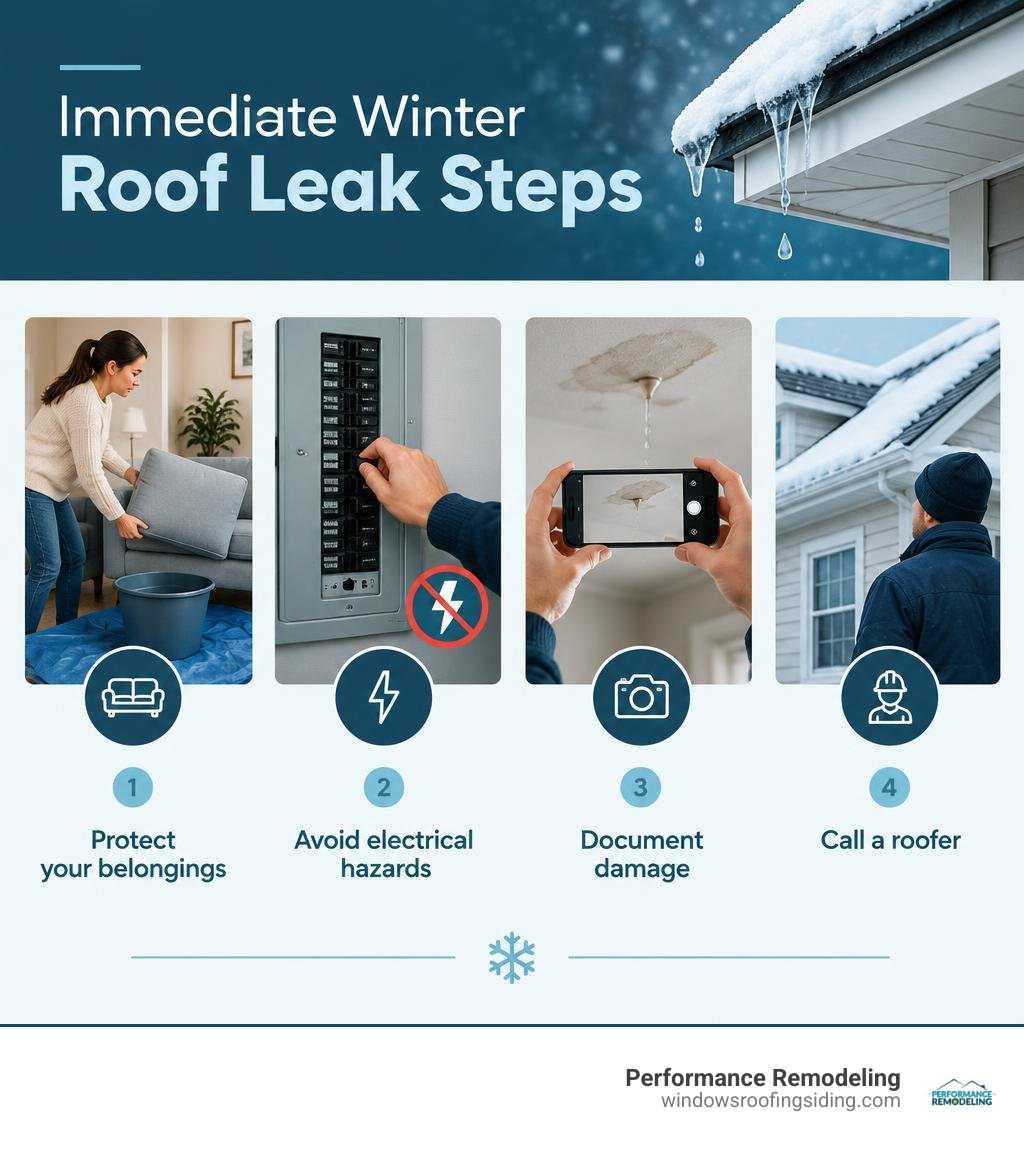
Emergency First Steps to Contain Winter Water Intrusion
When water makes its way through your ceiling during a freezing Michigan cold snap, panic is a natural reaction. However, acting methodically will prevent a minor drip from turning into a major interior collapse. Water travels along roof rafters, pooling across ceiling drywall until it finds an escape route. Containing that moisture immediately protects your living space, finishes, and structural framing.
Containing Active Drips and Interior Protection
Your first priority is interior water mitigation and electrical safety. If water is dripping near light fixtures, ceiling fans, or wall outlets, head straight to your breaker panel and shut off electricity to that room. Water conducts electricity, creating severe shock and fire hazards behind damp walls.
Next, address pooled water in the ceiling before drywall becomes saturated and caves in. If you notice a sagging ceiling bulge, grab a bucket and a long screwdriver. Place the bucket directly below the lowest point of the bulge and poke a small hole in the center. This creates a controlled drainage point, draining trapped water into the container rather than letting it spread horizontally across your ceiling joists. Spread plastic drop cloths or tarps across your floors and furniture to stop the drip before you slip and prevent irreversible flooring damage.
Documenting the Damage for Insurance Coverage
Before you start cleanup, thoroughly document the situation for your homeowner’s insurance carrier. Insurance adjusters require clear proof of the initial intrusion and resulting damage to process claims efficiently.
- Capture wide-angle and close-up photos and videos of the active leak, the ceiling drainage point, and any damaged drywall, trim, or flooring.
- Record the exact date, time, and current weather conditions outside, including recent snowfall, freezing rain, or severe wind gusts.
- Take clear pictures of your attic space if you can safely access it, showing damp insulation, stained roof decking, or frost accumulation.
- Keep a detailed log of every emergency measure you take, including purchasing tarps, buckets, or hiring emergency water mitigation contractors.
Primary Causes of Cold-Weather Roof Failures
Winter weather tests your roofing system against extreme freeze-thaw cycles, sub-zero temperatures, and heavy snow loads. Understanding the underlying source of water intrusion helps determine the right repair approach, as many distinct roof problems present identical symptoms inside your living areas.
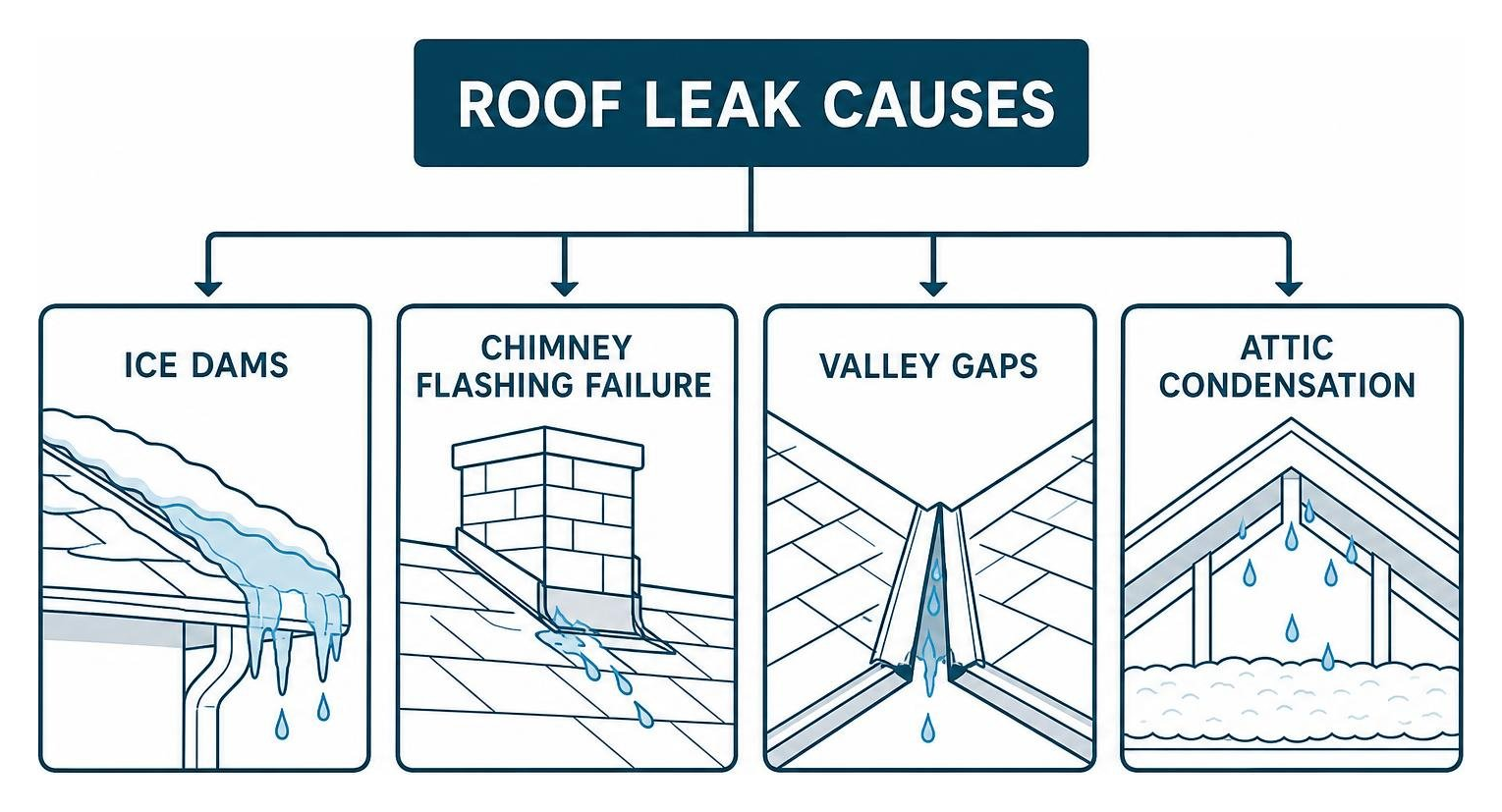
Ice Dam Formation and Meltwater Infiltration
Ice dams represent the most common winter roofing problem across Oakland, Macomb, and Wayne counties. An ice dam forms when heat escapes from your living space into the attic, warming the upper sections of the roof deck. This melted snow runs down the roof slope under the snow blanket until it hits the cold eaves and overhangs, which sit past the exterior wall line and remain below freezing.
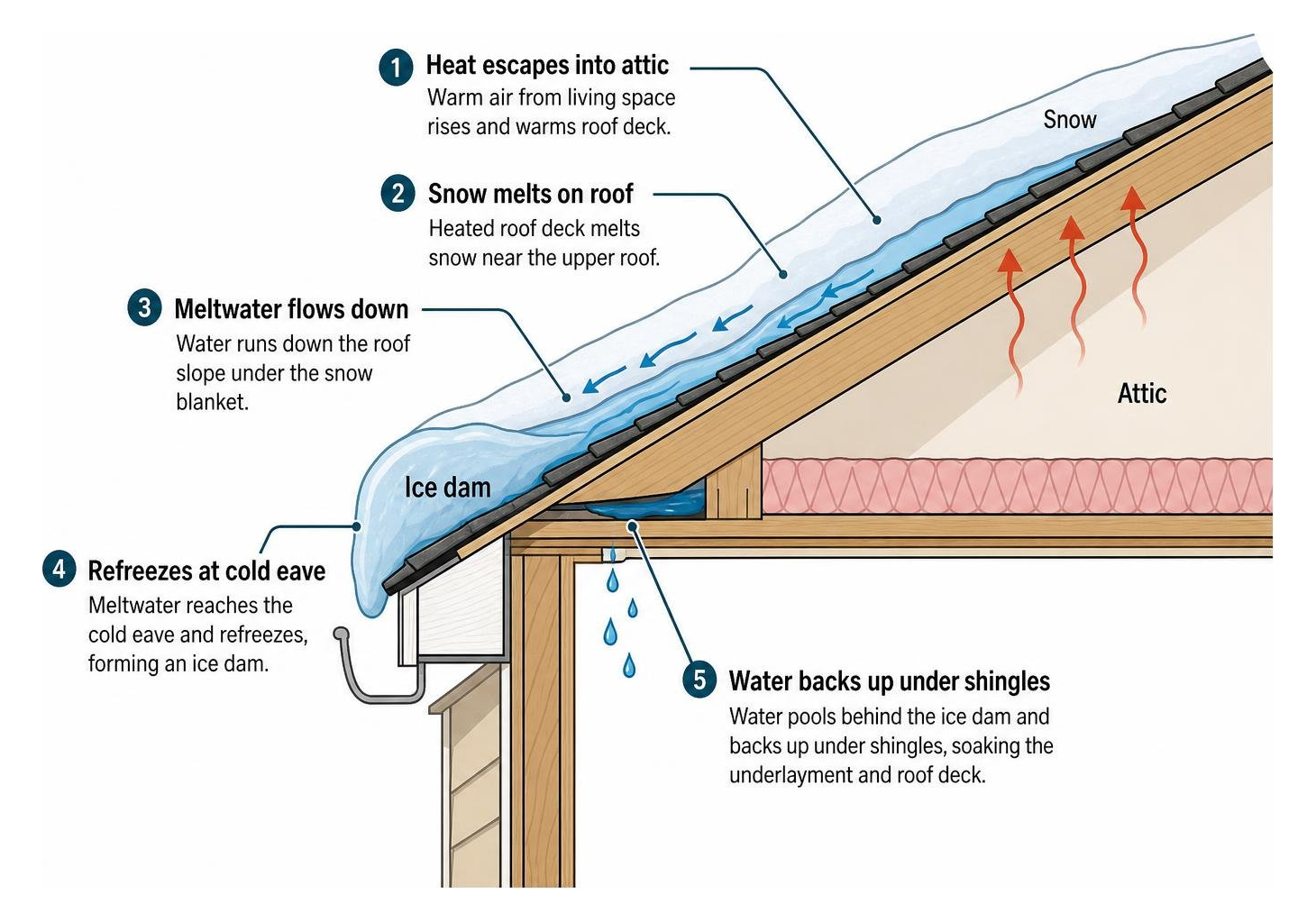
As this meltwater reaches the cold edge, it refreezes into a thick ridge of ice. Subsequent meltwater pools behind this frozen barrier. Because asphalt shingles are designed to shed downhill water rather than hold standing pools, trapped water backs up underneath the shingles, soaking through the underlayment and penetrating the roof deck. Homeowners looking at How To Get Rid of Ice Dams: Prevention & Fast Fixes – This Old House often utilize quick relief methods like filling pantyhose with calcium chloride to melt drainage channels through the ice ridge, or pulling fresh snow off the eaves using a long-handled roof rake with protective rollers.
Attic Condensation vs. Exterior Penetration
Not every winter ceiling drip originates from an exterior roof puncture. Warm, moisture-laden air from cooking, showers, and humidifiers rises into unconditioned attic spaces. If bathroom or kitchen exhaust fans vent directly into the attic rather than out through the roof or gable, warm air deposits gallons of moisture onto cold wood sheathing.
During prolonged sub-zero temperatures, this moisture freezes into a thick layer of frost across the underside of the roof deck and exposed nail tips. When outdoor temperatures suddenly rise above freezing, that frost melts simultaneously, raining down on your ceiling insulation and drywall. This creates symptoms that perfectly mimic an exterior roof leak. Recognizing these subtle signs you need roof repair ensures you do not waste resources patching shingles when your home actually requires duct ventilation and air sealing.
How to Find and Fix Roof Leak in Winter Conditions Safely
Tracking down the exact entry point of winter moisture requires careful detective work. Water rarely travels straight down; it follows rafters, runs along electrical conduits, and skips across horizontal ceiling joists before dropping through drywall.
Locating the Source from Inside the Attic Deck
The safest way to locate a leak during freezing weather is from inside your attic. Stepping onto an icy, snow-covered roof carries immense safety risks, so begin with a thorough interior inspection:
- Bring a high-lumen flashlight, safety glasses, and a non-contact moisture meter into the attic. Step only on reinforced ceiling joists or attic catwalks, never on bare drywall.
- Locate the damp ceiling area from below, then trace straight up to the roof deck above.
- Look for dark water stains, active drips, black mold growth, or white frost patterns along the rafters and plywood sheathing.
- Follow water trails upward toward their highest point on the roof slope. Water often enters around roof penetrations such as plumbing vent boots, chimney flashing, skylights, or roof valleys, then runs down several feet before dripping.
- Turn off your flashlight for a moment to check for visible daylight around roof penetrations or sheathing joints.
Temporary Emergency Methods to Fix Roof Leak in Winter Weather
Attempting permanent asphalt shingle replacements in sub-freezing temperatures is notoriously difficult because cold asphalt shingles turn brittle and crack when lifted. Instead, utilize temporary stabilization methods until sustained warm weather arrives:
- Attic Cold-Air Direction: If an ice dam is driving water beneath your shingles, set up a heavy-duty box fan in the attic and aim it directly at the leaking underside of the roof deck. The concentrated stream of freezing attic air refreezes the backed-up meltwater right at the entry point, stopping active water intrusion within minutes.
- Cold-Weather Sealants: Apply specialized low-temperature, rubberized elastomeric roofing mastic or wet-surface flashing cement over small exterior punctures or separated flashing. These compounds adhere to damp metal and asphalt surfaces even in freezing conditions.
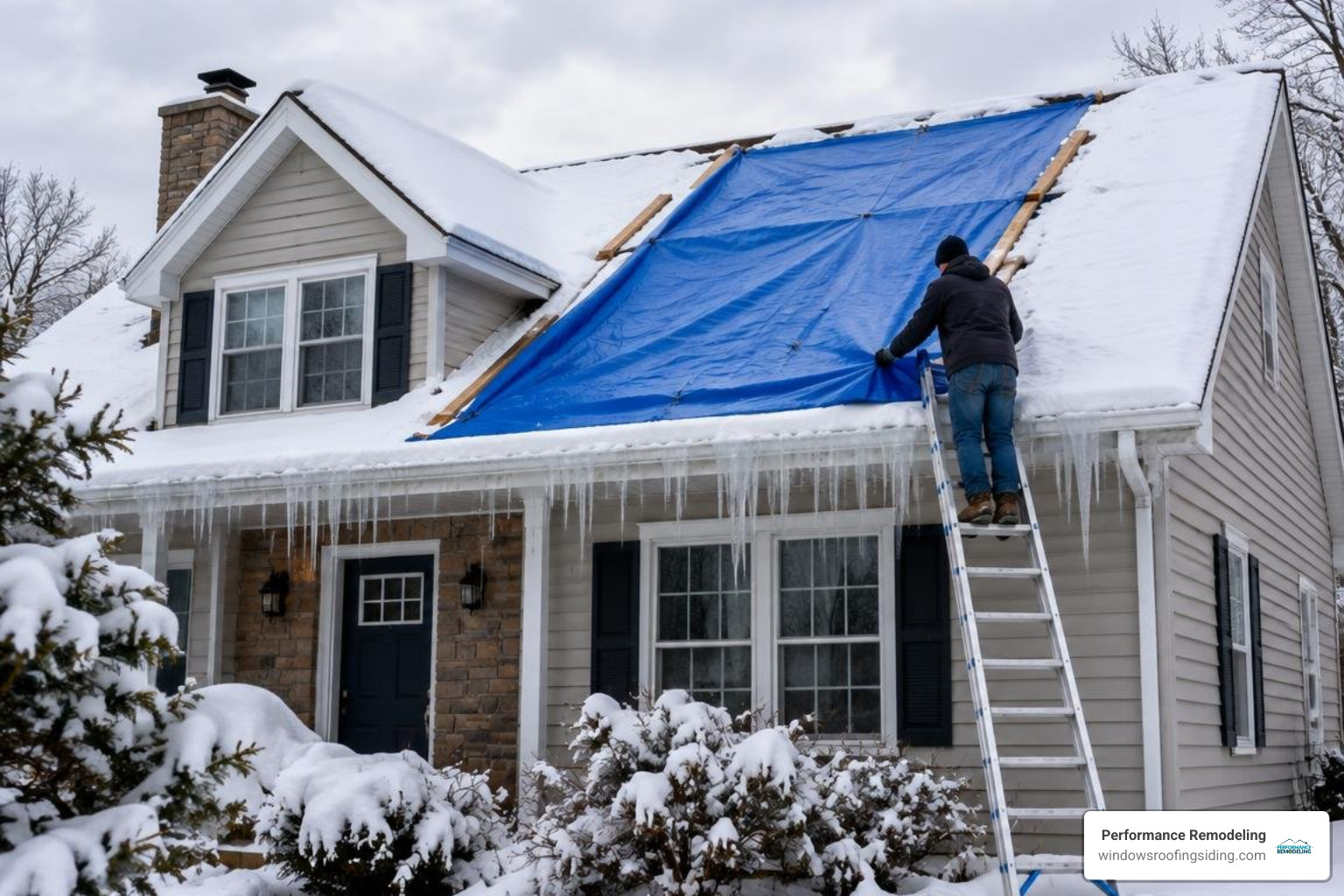
- Securing an Emergency Exterior Tarp: If an exterior repair is unavoidable and the roof can be accessed safely, cover the damaged section with a heavy-duty poly tarp. Extend the top edge of the tarp over the roof ridge to prevent water from running underneath. Secure the perimeter using wooden 2×4 anchor boards screwed through the tarp into the roof deck.
Repairing Valleys and Flat Roof Membranes in Freezing Temperatures
Roof valleys funnel massive volumes of meltwater and snowpack. When valley flashing fails or lacks adequate ice-and-water shield, water rapidly enters interior walls. Reviewing guides like How to Repair a Roof Leak in a Valley – DIY Guide – RoofingCalc.com highlights the necessity of using open valley metal flashing and seamless waterproof membranes to handle high-friction runoff, demonstrating why asphalt shingle roofing remains popular when installed alongside durable underlying metal valleys.
For flat or low-slope additions, porches, and commercial structures, materials like EPDM rubber or modified bitumen require specialized cold-weather maintenance. When winter splits occur, resources like Repairing a Flat Roof with Fibre Glass Sheeting | DIY Doctor detail how composite fiberglass resins or cold-applied EPDM self-adhesive patches create reliable, watertight bonds across low-pitch planes when standard asphalt cements fail to cure.
Winter Roof Repair Costs and Professional vs. DIY Solutions
Winter roof repairs present distinct logistical challenges that require careful evaluation before deciding between a DIY patch and professional intervention.

When to Call a Professional to Fix Roof Leak in Winter Storms
While homeowners can manage indoor containment, exterior winter roof repairs carry severe fall hazards. Frost and invisible black ice make steep roof planes treacherous. Beyond physical safety, professional roofers carry specialized fall-arrest systems, commercial roof snow rakes, hot-air seam welders, and cold-weather sealants designed to cure below freezing.
Call a licensed roofing contractor immediately if:
- The leak is located along a high-pitch, two-story roof deck or near power service drops.
- You notice sagging roof rafters, bowed interior walls, or extensive structural wood rot.
- The leak originates from deeply buried roof valleys covered in dense, frozen snowpack.
- Water intrusion spans multiple rooms or involves major masonry chimney flashing failures.
Breakdown of Winter Repair Scope vs. Replacement
The scope of winter roof remediation depends heavily on the extent of component failure and underlying moisture damage:
| Damage Category | Scope of Work Required | Winter Repair Considerations | Typical Service Approach |
|---|---|---|---|
| Minor Localized Repair | Replacing isolated missing shingles, resealing small vent boot collars, or securing loose flashing. | Shingles must be gently pre-warmed or sealed with specialized cold-weather adhesives to prevent shattering. | Emergency targeted sealant or temporary shingle tab replacement. |
| Medium Structural Repair | Rebuilding damaged roof valley sections, replacing chimney step-flashing, or clearing deep ice dams. | Requires clearing surrounding snowpack, installing self-adhering membranes, and mechanical fastening. | Ice dam steam extraction, metal valley re-flashing, and targeted underlayment patches. |
| Major Restoration / Replacement | Structural rafter reinforcement, replacing rotted decking sections, or widespread shingle delamination. | Full tear-offs require dry weather windows and rapid deck dry-in using synthetic underlayments. | Comprehensive structural remediation or planning a full roof replacement. |
Long-Term Prevention: Insulation, Ventilation, and Maintenance
Stopping winter roof leaks permanently requires addressing the thermal and airflow balance of your entire attic structure rather than simply replacing surface shingles.
- Maintain Consistent Attic R-Values: Ensure your attic floor maintains a deep, uncompressed thermal blanket. Adequate insulation keeps interior living heat inside your home, preventing heat transfer to the roof deck above.
- Ensure Balanced Intake and Exhaust Ventilation: Maintain a balanced ventilation system providing at least 1 square foot of net free ventilating area for every 300 square feet of attic floor space. Continuous soffit intake vents combined with a continuous ridge exhaust vent draw cold outside air across the underside of the roof deck, keeping the entire roof surface uniform in temperature.
- Air-Seal Bypasses and Ducts: Seal thermal leaks around attic access hatches, whole-house fans, recessed lighting cans, and chimney chases. Ensure all bathroom and kitchen exhaust ducts vent directly through insulated exterior wall or roof caps.
- Schedule Bi-Annual Roof Maintenance: Keep eaves, valleys, and downspouts free of autumn leaves and organic debris with regular roof maintenance to ensure winter meltwater drains freely without pooling along your roofline.
Frequently Asked Questions about Winter Roof Leaks
Can a roof leak be permanently repaired in freezing temperatures?
Most winter repairs serve as weather-tight emergency stabilizations. Asphalt shingles feature thermal sealant strips that require direct solar heat and ambient temperatures above 40°F to 50°F to activate and seal down fully. While mechanical fasteners and specialized winter mastics create durable, leak-free barriers through freezing weather, permanent aesthetic re-shingling is typically finalized in the spring.
How do I know if moisture in the attic is a roof leak or condensation?
Look at the distribution of the moisture. An exterior roof leak typically produces localized water stains, wet rafters, and dripping confined to a specific zone beneath a penetration or valley. Attic condensation appears as widespread frost, rusted nail tips across the entire underside of the roof deck, or generalized dampness spanning the whole insulation layer.
How does a box fan stop an active winter roof leak?
Positioning a box fan to blow cold attic air directly at the leaking roof deck lowers the wood temperature below 32°F. This quickly refreezes the liquid meltwater trapped behind an ice dam right at the point of entry, arresting active interior water drips until the exterior ice dam can be safely cleared.
Comprehensive Roofing Solutions Across Metro Detroit
Dealing with an unexpected winter roof leak can be a stressful experience, but taking quick, calculated steps to contain water and locate the underlying cause protects your home from costly structural damage. Whether your leak stems from a sudden ice dam, compromised chimney flashing, or winter condensation, addressing the issue with the right cold-weather techniques ensures your interior remains dry and comfortable all season long.
At Performance Remodeling, we bring over 18 years of seasoned craftsmanship to homeowners throughout Shelby Township, Novi, Rochester Hills, Plymouth, and the greater Metro Detroit area. Our team understands the severe demands Southeast Michigan winters place on residential roofing systems. We back our workmanship and premium materials with the region’s premier lifetime guarantee, giving you complete peace of mind through every winter freeze and summer storm. When you need dependable, long-term protection, turn to our team for dedicated professional roofing services built to last.