The Roof Over Most Metro Detroit Homes — And Why That’s No Accident
Architectural shingle roofs are the most popular roofing choice in the U.S. — and for good reason. Here’s a quick comparison so you can see how they stack up against standard 3-tab shingles:
| Feature | Architectural Shingles | 3-Tab Shingles |
|---|---|---|
| Lifespan | 20-30 years (avg. 25) | 10-20 years |
| Wind resistance | Up to 130 mph | 60-70 mph |
| Appearance | Dimensional, textured | Flat, uniform |
| Weight per bundle | 65-80 lbs | Lighter |
| Cost | 30-50% more than 3-tab | Lower upfront |
| Warranty | Up to Lifetime | Shorter |
| Resale value | Higher | Lower |
The bottom line: architectural shingles cost more upfront, but they last longer, look better, and hold up to Michigan weather far better than 3-tab shingles.
Drive through any neighborhood in Metro Detroit — Rochester Hills, Northville, Canton, Birmingham — and look up. Chances are, you’re looking at an architectural shingle roof. Also called dimensional or laminated shingles, these are now the dominant roofing material in the U.S., and they’ve earned that spot.
But a lot of homeowners still aren’t sure what makes them different from a standard asphalt shingle. Is the extra cost worth it? How long do they really last? Do they hold up to Michigan winters?
Those are exactly the right questions to ask — especially if your roof is pushing 20 years old and starting to show it.
We’ve installed hundreds of roofs across southeast Michigan. We’ve seen what holds up and what doesn’t. This guide gives you the straight answers.
The Anatomy of a Modern Architectural Shingle Roof
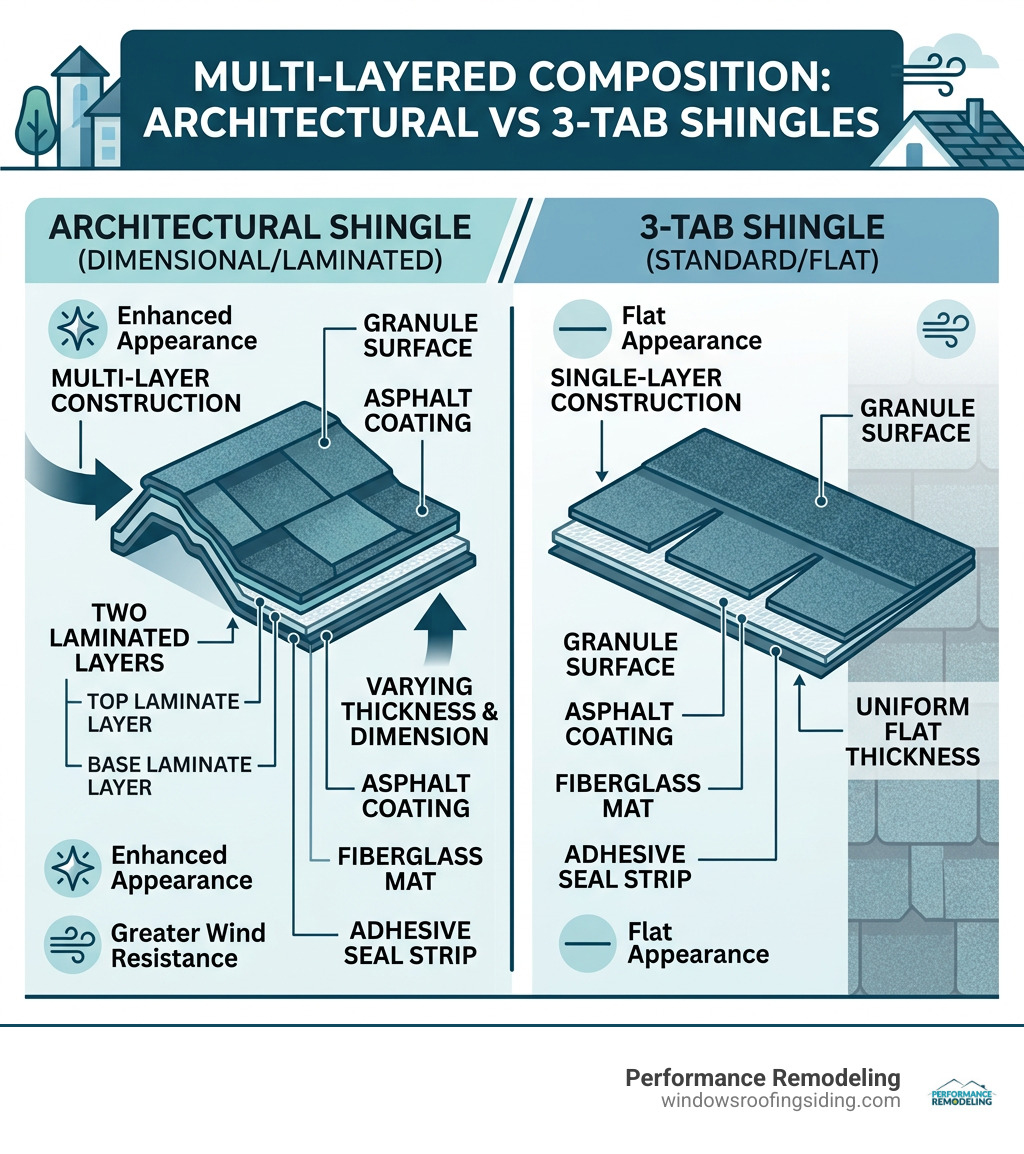
When we talk about an architectural shingle roof, we aren’t just talking about a different color or pattern. These shingles are built differently from the ground up. While traditional 3-tab shingles are a single flat layer of material with three cutouts (tabs) to give them shape, architectural shingles are multi-layered.
Technically known as laminated or dimensional shingles, they are composed of several key components:
- The Fiberglass Mat Base: This is the “skeleton” of the shingle. It’s a heavy, non-woven fiberglass mat that provides the structural integrity and fire resistance.
- Water-Resistant Asphalt: The mat is coated with specially formulated asphalt that acts as the waterproofing agent. In high-quality shingles, this asphalt is designed to stay flexible across the extreme temperature swings we see in Southeast Michigan.
- Ceramic-Coated Mineral Granules: These are the “skin” of the shingle. These granules protect the asphalt from UV rays, provide the color, and often include additives to resist algae growth.
- Laminated Layers: This is the secret sauce. Manufacturers bond two or more layers of these materials together to create a shingle with varying thicknesses. This creates the “dimensional” look that mimics the depth of natural materials like wood or slate.
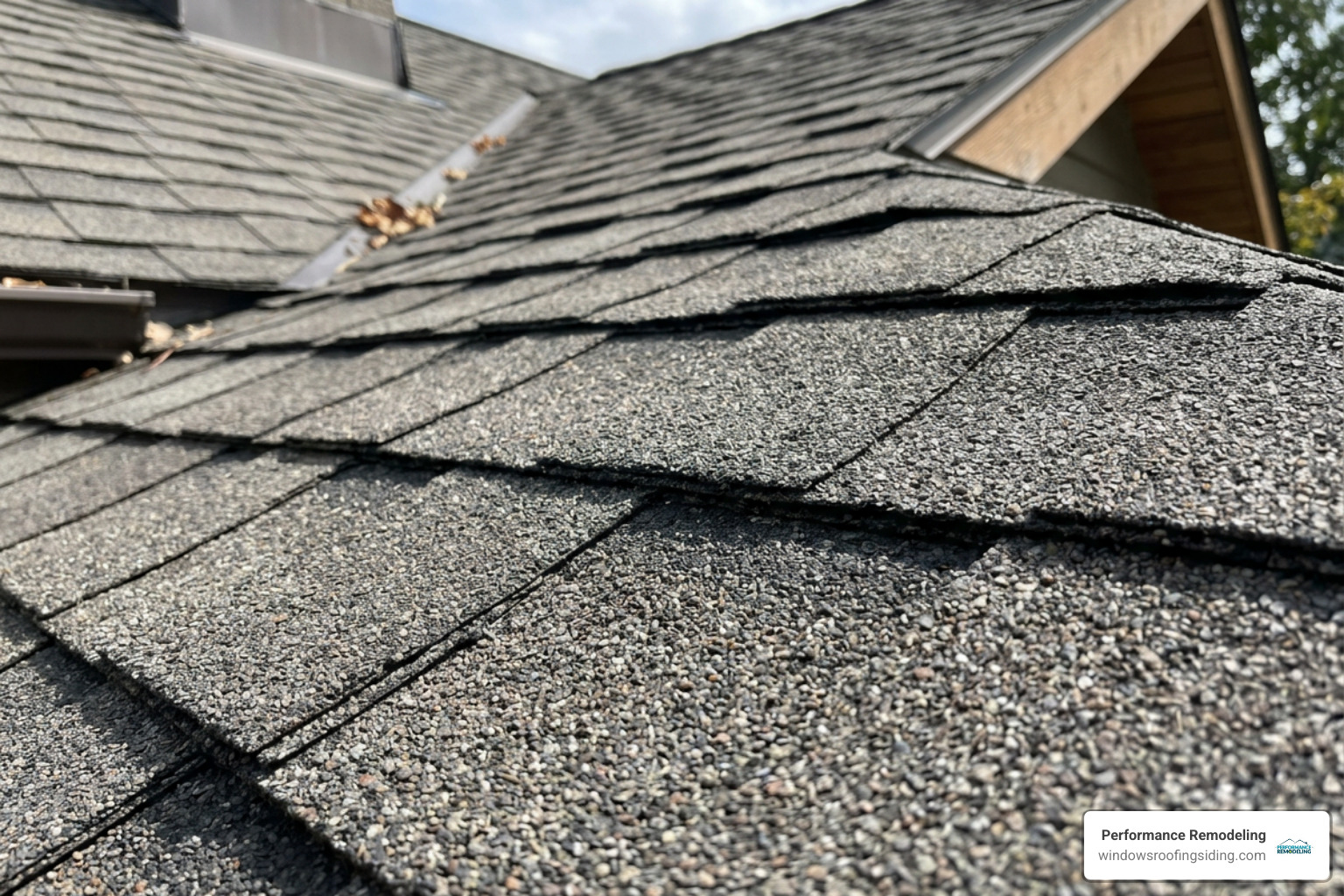
Because of this multi-layered construction, an architectural shingle roof weighs significantly more than a 3-tab roof—typically between 65 to 80 pounds per bundle. This extra mass isn’t just for show; it’s what gives the roof its superior durability.
Performance Benefits: Why Dimensional Shingles Rule the Market
If you’re comparing 3-tab vs. architectural shingles, the performance gap is wider than most people realize. In our 18+ years of serving Metro Detroit, we’ve found that homeowners who choose dimensional shingles rarely regret the investment because of how they handle our “four seasons in one week” climate.
| Feature | 3-Tab Shingles | Architectural Shingles |
|---|---|---|
| Wind Rating | 60–70 mph | 110–130 mph |
| Weight | ~200 lbs per square | ~300+ lbs per square |
| Visual Depth | Flat/Uniform | Textured/Shadow lines |
| Algae Resistance | Basic | Enhanced (often 25+ years) |
| Impact Resistance | Limited | Available in Class 3 or 4 |
When we perform Roofing services, we often explain that the “cheaper” option usually ends up being more expensive in the long run. Architectural shingles offer better wind resistance, better impact ratings (crucial for those random Michigan hailstorms), and superior algae protection to prevent those ugly black streaks from forming on your North-facing roof slopes.
Why an Architectural Shingle Roof Outlasts 3-Tab
The primary reason an architectural shingle roof outlasts its 3-tab counterpart is material density. Dimensional shingles have approximately 50% more material weight per square foot. This extra weight, combined with double-layer bonding, makes them much harder for the wind to lift.
While a standard shingle might start flapping or blow off in a 60 mph gust, many architectural shingles—like the popular GAF Timberline HDZ series—are rated for 130 mph wind resistance when installed with the correct starter strips and ridge caps. This is achieved through advanced sealant adhesion technology that creates a “fused” bond across the entire roof deck.
Michigan-Proof Durability and Lifespan
In Southeast Michigan, a roof has a tough job. It has to endure 95-degree humidity in July and -10-degree freezes in January. This “freeze-thaw” cycle is brutal on building materials.
An architectural shingle roof typically lasts between 20 and 30 years, with a realistic average of 25 years in our region. While you might see “30-year” or “Lifetime” labels, the actual lifespan is heavily influenced by how the roof is built as a system.
To get the most out of your roof and avoid common Roof Problems, we focus on three critical Michigan-specific factors:
- Proper Drip Edge: We recommend a 1.5-inch T-Stock drip edge around the entire perimeter. This prevents water from wicking back under the shingles and rotting your fascia boards or causing shingle curling at the edges.
- Attic Ventilation: Without proper airflow, your attic becomes an oven in the summer (baking the shingles from the inside out) and a moisture trap in the winter (leading to ice dams).
- Ice and Water Shield: In places like Shelby Township or West Bloomfield, heavy snow loads are a given. Installing a leak barrier in the valleys and along the eaves is mandatory for a roof to survive 25+ winters.
Investment Value and Curb Appeal
One of the biggest draws of an architectural shingle roof is how it transforms the look of a home. Before these became popular in the 1980s, your only options for a high-end look were real cedar shakes or slate tiles—both of which are incredibly expensive and heavy, often requiring extra structural support for the house.
Modern dimensional shingles are designed for mimicry:
- Slate Mimicry: Thick, heavy shingles with staggered edges can replicate the look of natural stone.
- Cedar Shake Simulation: Random slots and varied color tones create the rustic texture of wood shakes without the high maintenance or fire risk.
Beyond aesthetics, there’s a financial upside. Homes with newer architectural roofs tend to sell faster and command higher prices in the Metro Detroit market. Furthermore, if you opt for Class 4 impact-resistant shingles, many insurance companies in Michigan offer discounts on your premium because the roof is significantly less likely to suffer hail damage.
Estimating the Cost of an Architectural Shingle Roof
When you’re looking at A Homeowner’s Guide to Roof Replacement in 2026, you’ll notice that pricing isn’t just about the shingles themselves.
For a standard two-story house in Southeast Michigan with moderate complexity, you can expect an architectural shingle roof to cost roughly 30-50% more than a 3-tab roof for materials and labor combined. On average, this comes out to approximately $5.86 per square foot when you include all components (underlayment, flashing, vents, and labor).
While the material cost is higher, the labor is often similar, meaning the “upgrade” to architectural shingles is one of the most cost-effective ways to increase your home’s value during a renovation.
Frequently Asked Questions
How long do architectural shingles typically last?
In the Greater Metro Detroit area, you can realistically expect 22 to 25 years of service from a high-quality architectural shingle. While manufacturers often provide “Lifetime” warranties, these are prorated over time. The actual lifespan depends heavily on proper attic ventilation and routine maintenance, such as keeping gutters clear and removing heavy debris like wet leaves.
Are architectural shingles worth the extra cost?
Absolutely. From a lifecycle economics perspective, architectural shingles are cheaper per year of service. A 3-tab roof might last 12-15 years, while an architectural roof lasts 25. When you factor in the increased energy efficiency (due to better insulation properties of the thicker material) and the higher resale value, the “extra” cost usually pays for itself within a decade.
Do architectural shingles increase home value?
Yes. In competitive markets like Novi, Plymouth, or Rochester Hills, curb appeal is everything. Real estate data shows that architectural shingles are the “gold standard” for buyers. A flat 3-tab roof can sometimes look like a “budget” choice, whereas a dimensional roof suggests the home has been well-maintained and upgraded.
Conclusion
At Performance Remodeling, we believe your roof should be the last thing you worry about when a Michigan storm rolls through. Whether you are in Macomb, Oakland, or Wayne County, choosing an architectural shingle roof is the smartest way to balance beauty, durability, and long-term value.
We’ve spent over 18 years perfecting our craft in Southeast Michigan. We don’t just “slap on shingles”—we install complete roofing systems backed by the best lifetime guarantee in the region. Our team of certified installers ensures that every component, from the wide T-stock drip edge to the ridge ventilation, is positioned for maximum performance.
If you’re ready to upgrade your home’s “crown” and want a roof that truly is the king of the cul-de-sac, we’re here to help.