
Fix Window Damage Before It Gets Worse
Most window repair starts with finding the damaged part, not replacing the entire window. Check the glass, frame, sash, locks, weatherstripping, and sealant. If the frame is solid and the problem is limited to a cracked pane, foggy insulated glass, worn hardware, drafts, or small areas of wood rot, a targeted repair may restore function and comfort.
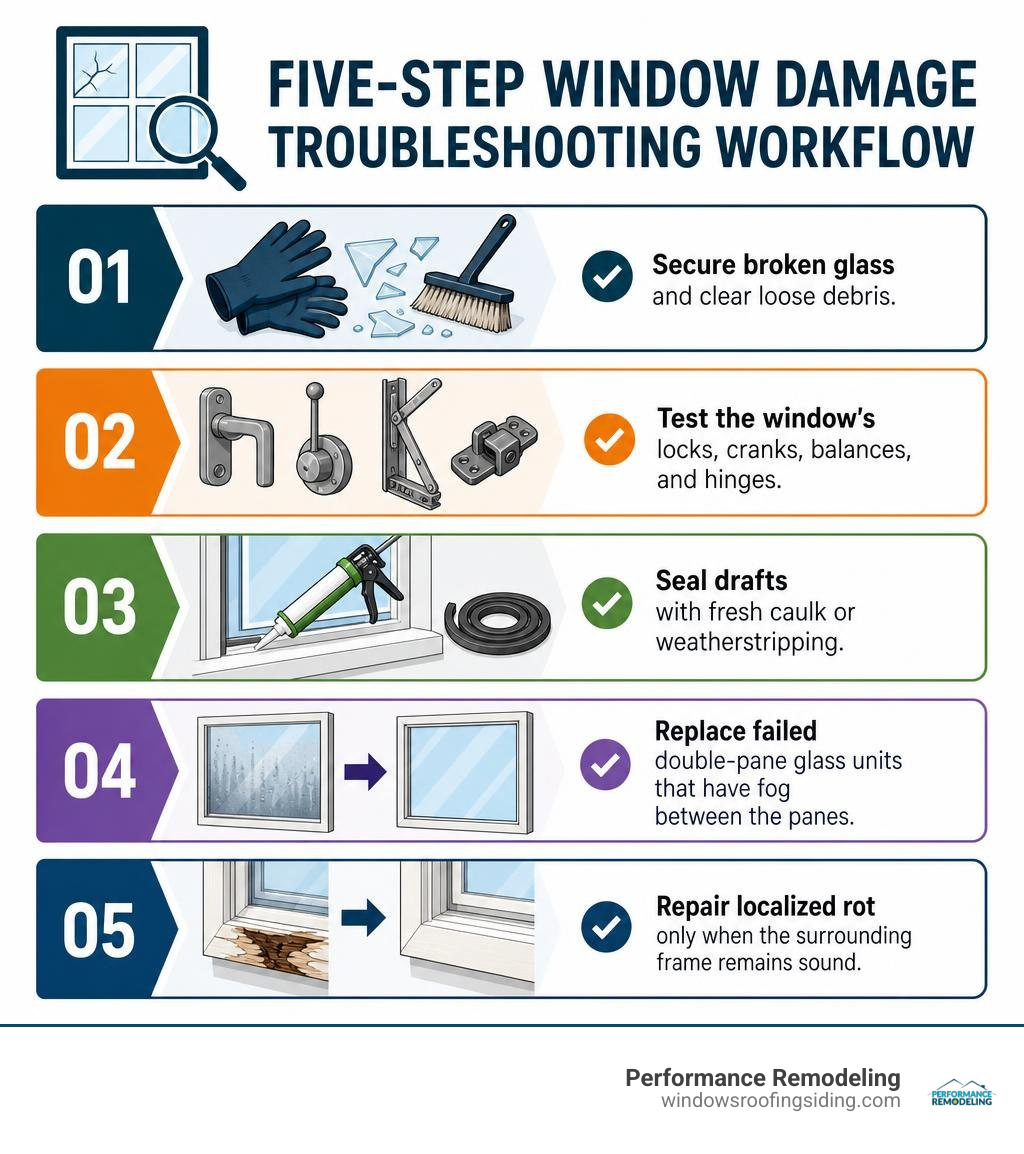
Use this simple approach:
- Secure broken glass and clear loose debris.
- Test the window’s locks, cranks, balances, and hinges.
- Seal drafts with fresh caulk or weatherstripping.
- Replace failed double-pane glass units that have fog between the panes.
- Repair localized rot only when the surrounding frame remains sound.
A window that is warped, deeply rotted, corroded, leaking into the wall, or failing in several ways may need full replacement instead. Acting early can help prevent water damage, energy loss, and security concerns.
At Performance Remodeling, we help Metro Detroit homeowners identify whether a practical repair or a durable replacement is the smarter next step.
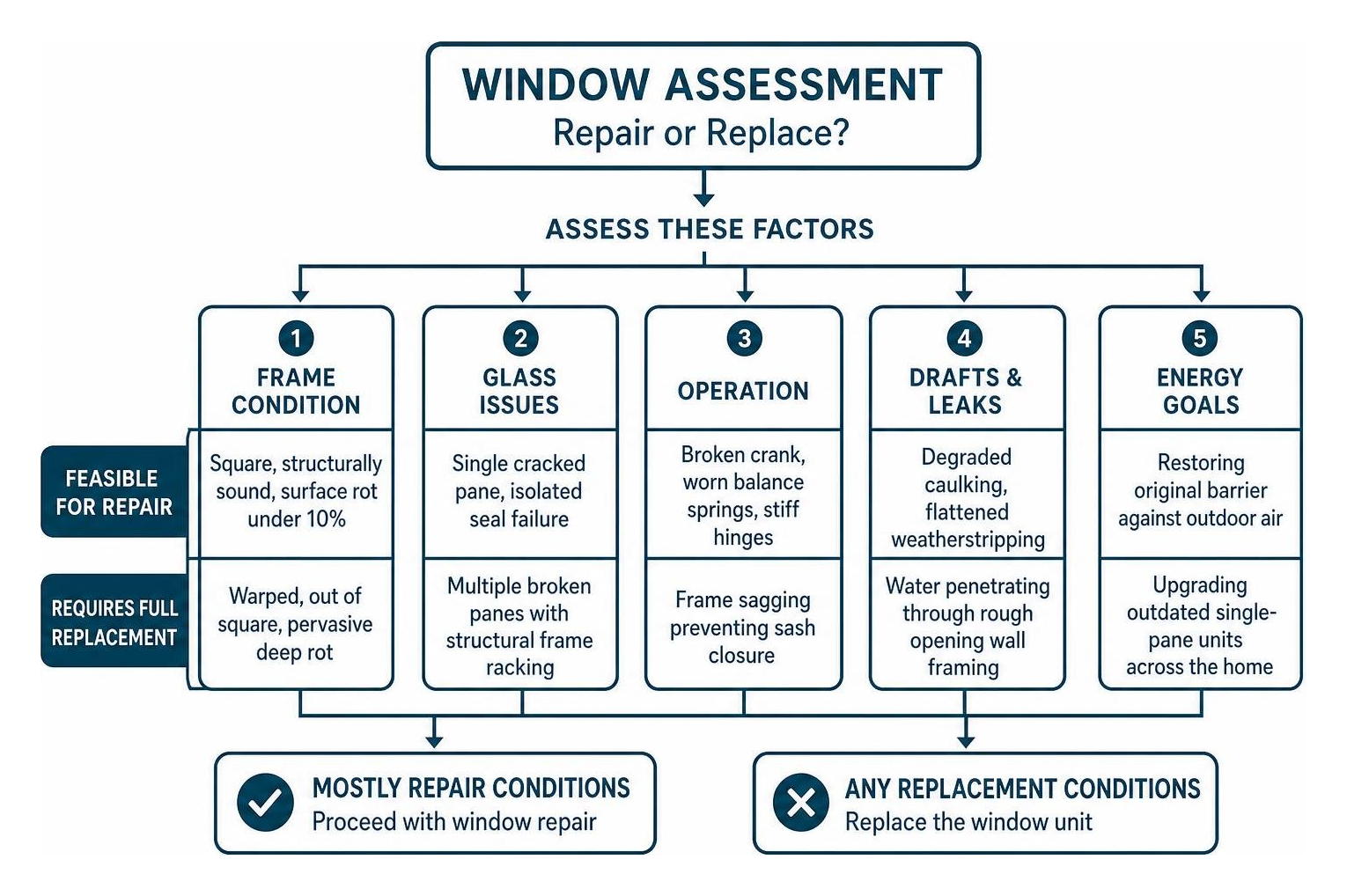
Assessing the Damage: Window Repair vs. Replacement Decision Guide
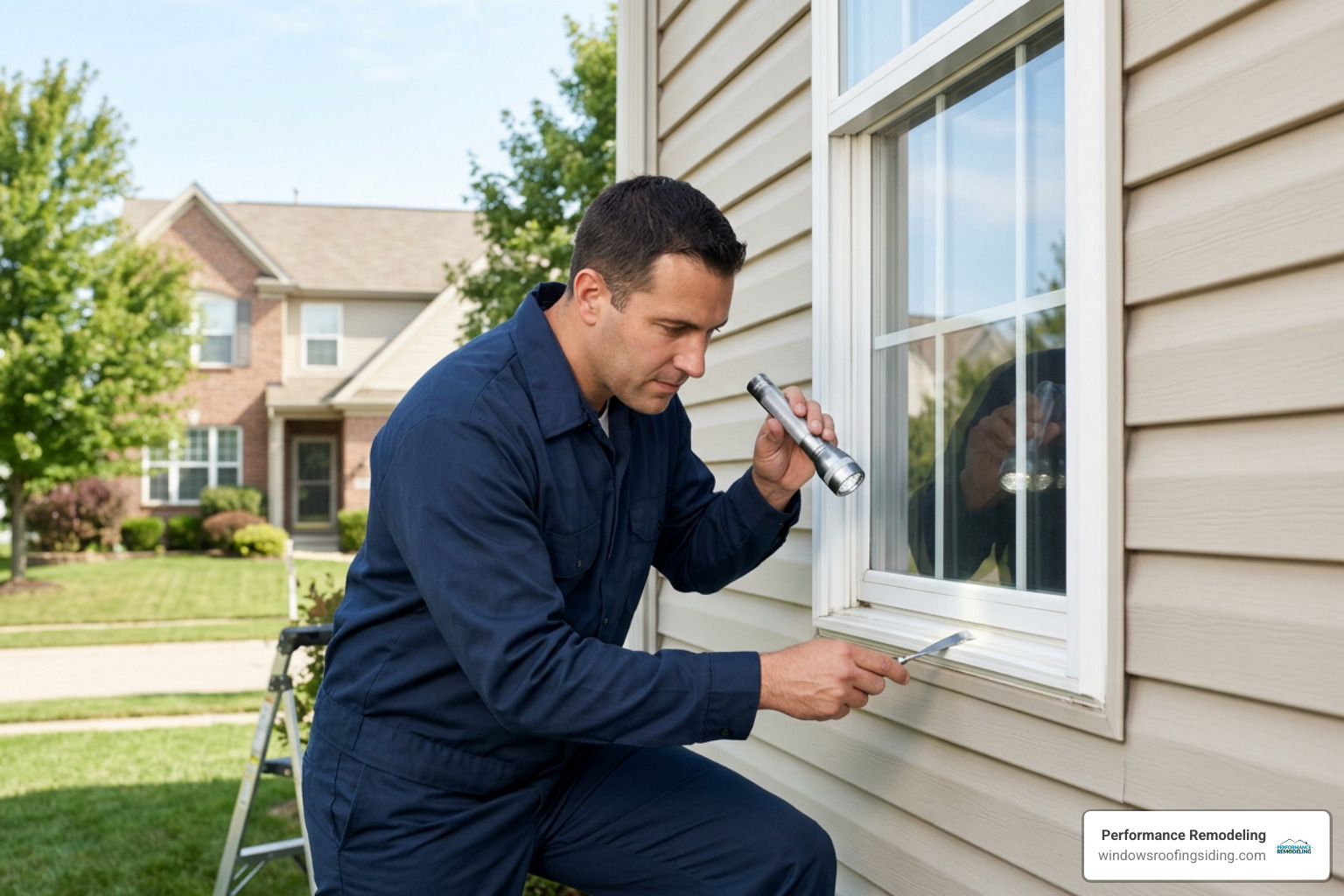
When dealing with drafty rooms or sticking sashes in Southeast Michigan, the first task is diagnosing the root issue. You do not always need to tear out the entire unit when an isolated component fails. A clear diagnostic assessment separates a simple fix from a project requiring full Window Installation.
Evaluating Frame Integrity and Structural Soundness
Before fixing individual parts, inspect the perimeter framing, sash joints, and exterior sill. Press a flathead screwdriver gently against the lowest corners of the exterior sill and jambs. If the wood feels solid and resists pressure, the frame remains structurally capable.
If the tool sinks deep into soft, spongy wood, water has penetrated behind the exterior protective layers. Frame warping, mold growth inside wall cavities, or sashes that sit crooked within the jamb indicate structural settlement or prolonged moisture intrusion. In those situations, replacing the unit protects the surrounding wall framing from hidden structural decay.
Comparing Single, Double, and Triple-Pane Glass Damage
Different glass types require distinct repair strategies. Understanding how your windows are constructed helps determine the right repair path:
- Single-Pane Units: Found primarily in older architecture, single sheets of glass can be scraped free of old glazing putty and replaced individually without disturbing the sash framework.
- Double-Pane Insulated Glass Units (IGUs): These sealed units rely on an airtight perimeter spacer filled with desiccant and sealed with insulating gases like argon. When thermal stress breaks this perimeter seal, outdoor humidity enters, causing permanent condensation between the panes. You do not need to replace the entire window assembly; instead, an expert can remove the glazing beads and swap out the sealed IGU cartridge.
- Triple-Pane Units: Built with two internal chambers and multi-layer Low-E coatings, these offer exceptional thermal barrier performance. If an outer pane cracks while the inner seals stay intact, replacing the entire triple-layer glass pack restores original impact resistance and efficiency.
The 5-Step Process to Fixing Common Window Issues
Addressing residential window damage requires systematic troubleshooting, the right tools, and an eye for safety. Homeowners can resolve many localized problems using our standard professional services workflow.
Step 1: Clean, Secure, and Prep the Damaged Area
Safety comes first whenever glass breaks or frames deteriorate. Put on heavy-duty leather work gloves and protective eyewear.
If a storm or impact cracked a pane:
- Apply heavy-duty crisscrossed masking or painter’s tape across both sides of the crack to prevent shards from falling.
- For shattered glass, carefully remove loose shards from the top down, placing them into a heavy cardboard box.
- Vacuum the bottom sash track and sill thoroughly to eliminate microscopic glass splinters.
- If inclement weather is approaching, apply an emergency board-up using cut-to-size exterior plywood or heavy plastic sheeting taped securely across the opening.
Step 2: Resolve Hardware and Mechanism Failures with Window Repair
Operational failures usually stem from mechanical wear rather than damaged framing. Constant exposure to dirt and seasonal humidity changes can cause moving components to bind.
- Casement Operators and Cranks: Strip out stripped crank handles by loosening the set screw underneath. If the internal worm gear slips, unscrew the operator housing from the sill, install a matching replacement arm, and secure it with corrosion-resistant screws.
- Sash Balances: When double-hung sashes refuse to stay raised, the spiral or constant-force spring balances inside the side jambs have likely snapped or lost tension. Remove the sash stops, detach the balance shoe, and clip a new balance mechanism into the track.
- Locks and Latches: Clean out built-up grime inside sash cam locks with a stiff brush. Lubricate sliding metal pivots with dry silicone spray (avoid oil-based lubricants, which attract airborne grit), and adjust keeper alignment if settling has pulled the latch off-center.
Step 3: Eliminate Drafts with Weatherstripping and Fresh Sealant
Drafty perimeters allow conditioned indoor air to escape, putting extra strain on heating and cooling systems throughout Michigan’s changing seasons.
- Remove Degraded Caulking: Use a utility knife and putty blade to peel away cracked, dried exterior caulking along the perimeter trim. Clean the gap with rubbing alcohol to remove leftover residue.
- Apply High-Grade Sealant: Run a continuous bead of paintable exterior silicone sealant along the exterior casing, maintaining a consistent 45-degree angle.
- Upgrade Weatherstripping: Strip away brittle vinyl or crushed foam tape from the sash meeting rails and interior stops. Replace with self-adhesive closed-cell foam or durable V-strip weatherstripping along the sash channels to establish an airtight thermal seal when closed.
Step 4: Address Foggy Glass by Replacing the Insulated Glass Unit
Fogged glass means the perimeter seal has failed, allowing damp air into the dead air space between panes. Rather than tearing out the exterior casing, you can replace just the glass unit:
- Pop off the interior vinyl or wood glazing beads surrounding the pane using a flexible putty knife.
- Carefully cut the double-sided glazing tape holding the glass unit against the sash frame.
- Measure the exact height, width, and overall thickness of the old IGU, noting any decorative internal grid patterns.
- Set the replacement IGU into place on top of setting blocks, apply fresh glazing tape along the frame shoulder, and snap the glazing beads firmly back into position.
Step 5: Address Localized Wood Rot and Frame Window Repair
If water has caused localized wood decay along the exterior sill while leaving the structural frame solid, complete a targeted wood restoration:
- Scrape away all soft, decayed wood using a curved wood gouge until you reach clean, dry lumber.
- Drill small relief holes into the sound timber and saturate the exposed area with liquid wood hardener to arrest future fungal development.
- Mix a two-part structural epoxy wood filler and press it firmly into the void using a wide putty knife, shaping it slightly proud of the surrounding wood profile.
- Once cured, sand the surface flush with sandpaper, apply exterior oil-based bonding primer, and finish with two coats of premium exterior acrylic paint.
Frame Materials and Historic Restoration Considerations
The framing material dictates how window restoration should be approached:
- Vinyl Frames: Modern vinyl requires very little maintenance, but cracked vinyl corners or warped extrusions cannot be structurally patched. Glass and hardware can be swapped easily, but twisted vinyl assemblies require replacement.
- Aluminum Frames: Often chosen for commercial properties and mid-century designs, aluminum holds up well against physical impact. However, if the internal thermal break fails or structural corners oxidize, moisture condensation can increase significantly along the interior frame.
- Fiberglass Frames: Exceptionally rigid and resistant to thermal expansion, fiberglass rarely rots or warps. Hardware and seal components can be serviced indefinitely without weakening the surrounding frame.
- Solid Wood Frames: Wood offers classic aesthetics and excellent thermal insulation, but requires periodic maintenance to prevent moisture absorption and rot along joints.
Restoring Historic Windows vs. Upgrading to Modern Units
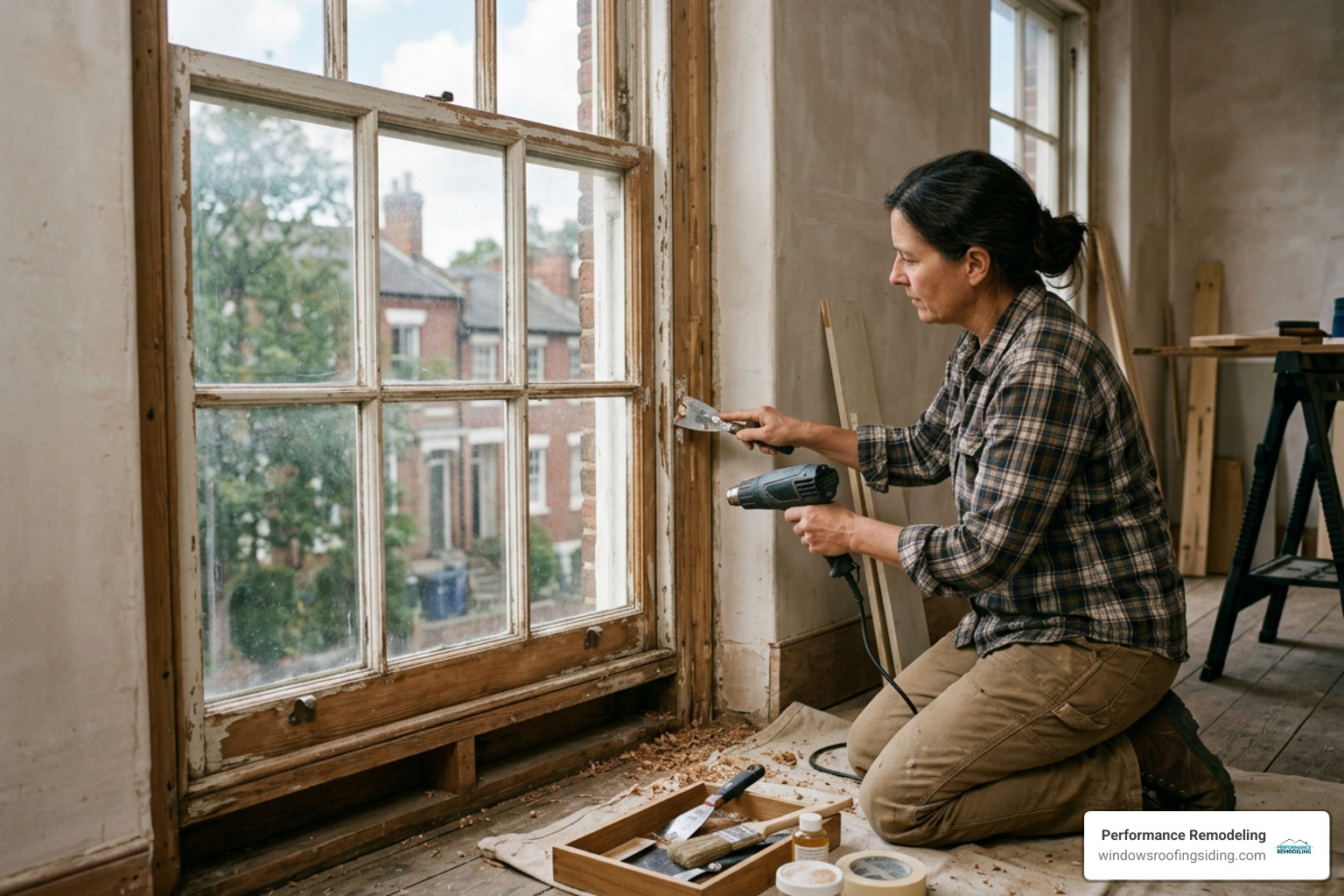
Historic properties throughout communities like Plymouth, Romeo, and Rochester Hills often feature old-growth wood windows crafted with fine joinery. These historic sashes can often be preserved:
- Preserving Character: Original wavy cylinder glass, solid wood muntins, and cast-bronze hardware define a property’s historic appeal. Sashes can be re-roped using traditional cotton sash cord, counterweights re-hung inside weight pockets, and loose glass re-bedded with fresh linseed-oil glazing putty.
- Balancing Upgrades: While restored historic single-pane sashes paired with tight exterior storm windows offer respectable efficiency, heavily neglected frames with extensive rot may no longer seal properly. If moisture damage extends across multiple sills, review What To Expect During A Professional Window Installation to explore modern, architecturally sympathetic replacements.
Costs, Repair Timelines, and Emergency Damage Management
Addressing window issues quickly helps prevent secondary moisture damage to interior drywall, insulation, and hardwood flooring.
- Emergency Storm Damage: When high winds, falling tree limbs, or flying debris break a window pane, board the opening immediately to prevent rain and wind from damaging your home’s interior.
- Insurance Documentation: Before discarding broken glass or peeling weatherstripping, take high-resolution photos of the damaged components, the exterior elevation, and any interior water stains. These images provide essential documentation for homeowner insurance claims.
- Project Turnaround: Hardware repairs, weatherstripping updates, and broken single-pane glass swaps can often be completed on-site in one to two hours. Custom double-pane IGUs require precise factory manufacturing, which typically takes several business days from initial measurement to final installation.
- Choosing the Right Contractor: Always partner with an established, fully insured contractor. If you live in Oakland County or Wayne County, check The Best Window Installation Farmington Mi Has To Offer and review local contractor ratings to select a team with a proven reputation for quality craftsmanship.
Frequently Asked Questions
Can foggy double-pane glass be repaired without replacing the frame?
Yes. Foggy glass occurs when the perimeter seal of an insulated glass unit (IGU) fails, allowing ambient humidity into the space between the glass panes. A technician can remove the interior glazing stops, extract the failed glass cartridge, and install a brand-new sealed unit with fresh Low-E coatings and argon gas while keeping your existing frame completely intact.
How do I know if my drafty window needs resealing or full replacement?
If the window frame is square, the wood or vinyl is solid, and drafts only enter around the sash perimeter or exterior casing, the unit can usually be resealed using new weatherstripping and high-grade silicone caulking. However, if the frame is noticeably warped, out of square, or soft from wood rot, air leaks will persist, making a complete window replacement the better choice.
How long does a standard window glass or hardware repair take?
Standard hardware repairs, balance spring replacements, and single-pane glass swaps typically take one to two hours per window during an on-site service visit. When replacing custom double-pane or triple-pane insulated glass units, the technician will take exact measurements during an initial visit, order the custom glass pack, and return for a quick installation once the unit has been built.
Conclusion
Keeping your windows in top condition protects your home’s security, keeps utility bills manageable, and maintains year-round comfort across Southeast Michigan. While many minor hardware issues, localized rot, and seal failures can be resolved with targeted fixes, chronic structural deterioration or widespread seal failure across older windows often calls for a modern upgrade. At Performance Remodeling, our team brings more than 18 years of local exterior remodeling experience to every home. We stand behind our work with our comprehensive lifetime guarantee, ensuring your investment remains protected through every Michigan winter and summer for decades to come.