
The Classic 6 Panel Exterior Door: What Every Homeowner Should Know
A 6 panel exterior door is one of the most popular front door styles in American homes — and for good reason. It’s a timeless design that works across Colonial, traditional, ranch, and farmhouse styles alike.
Quick answer: What is a 6 panel exterior door?
- A door divided into 6 rectangular raised or recessed panels arranged in 3 rows of 2
- Available in steel, fiberglass, and wood
- Comes as a slab (door only) or pre-hung unit (door + frame)
- Standard size: 36″ wide x 80″ tall
- Suits traditional, Colonial, farmhouse, and ranch home styles
It’s not just about looks. The right 6 panel door also delivers security, energy efficiency, and weather protection — especially important for Metro Detroit homeowners dealing with harsh Michigan winters and freeze-thaw cycles.
With so many materials, sizes, and configurations available, choosing the right door can feel overwhelming. Steel, fiberglass, or wood? Slab or pre-hung? Glass inserts or solid panels? Each choice affects your home’s curb appeal, energy bills, and long-term maintenance load.
At Performance Remodeling, we’ve helped hundreds of Southeast Michigan homeowners navigate exactly these decisions — and this guide covers everything you need to make a confident choice.
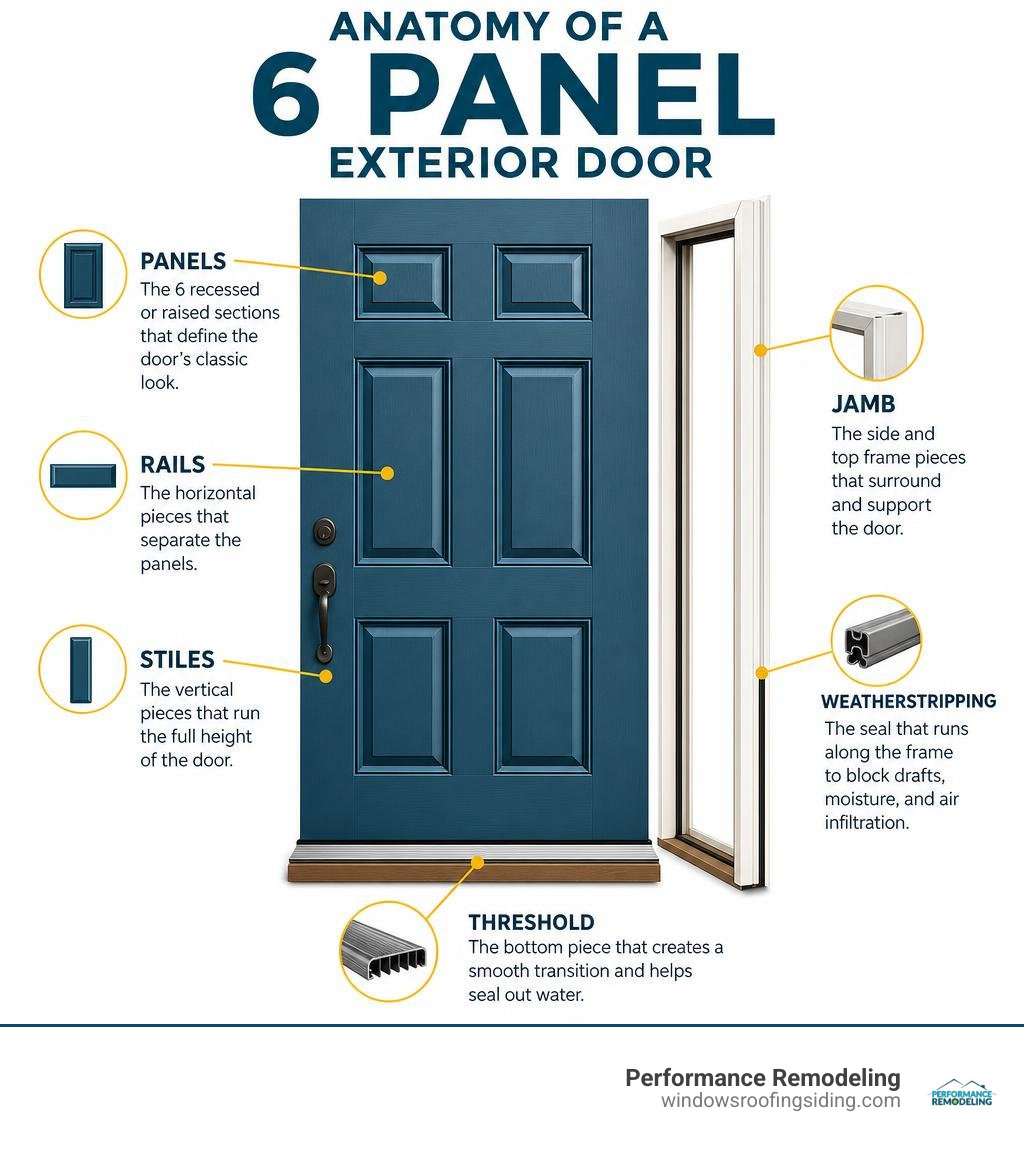
6 panel exterior door terms at a glance:
How to Choose the Perfect 6 Panel Exterior Door for Your Home
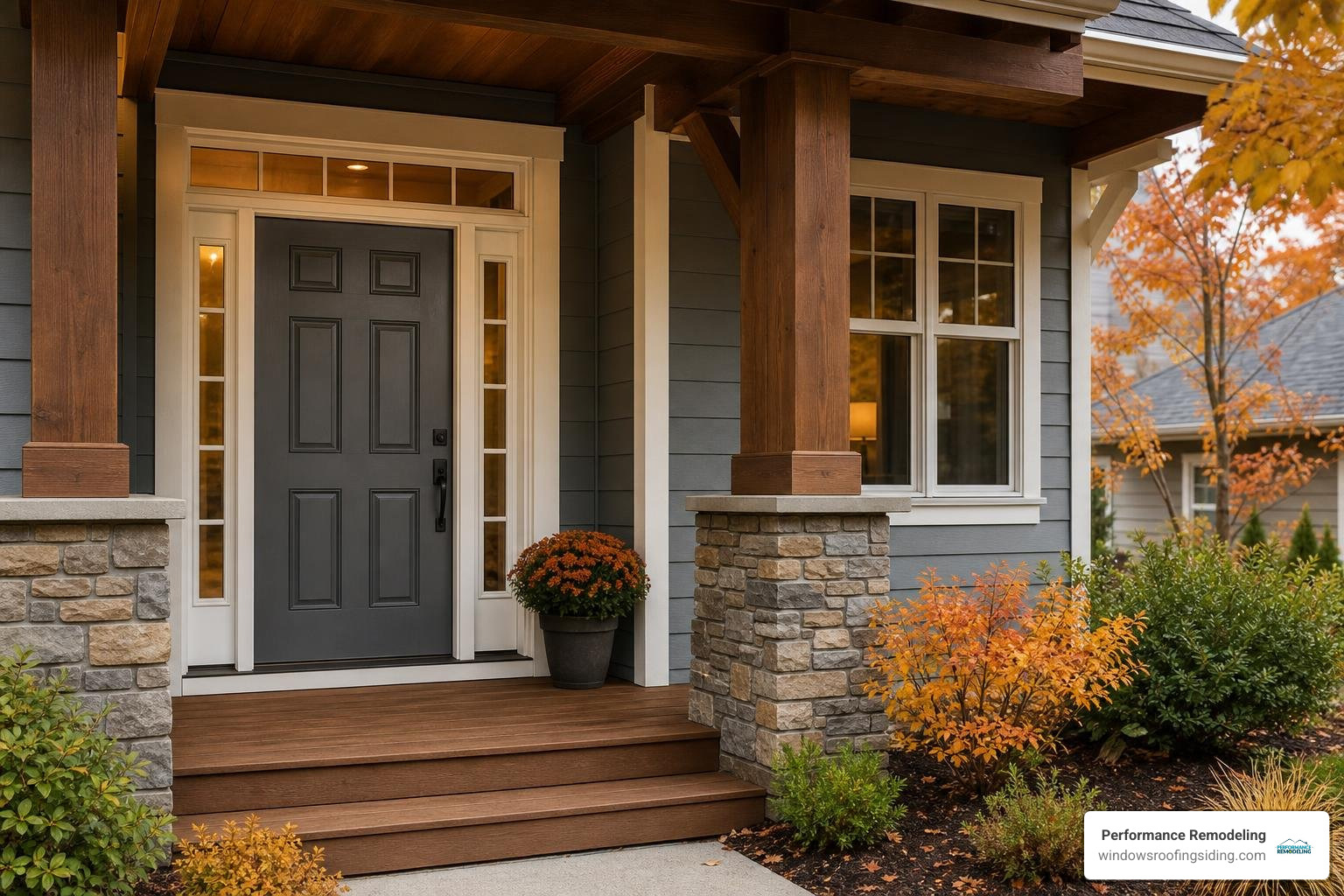
Selecting the right door is about balancing beauty, budget, and durability. In Southeast Michigan, our homes face brutal winter winds, heavy lake-effect snow, and humid summers. This constant fluctuation means your material choice is the single most important decision you will make.
When comparing your options, the debate usually comes down to steel doors vs fiberglass doors, though classic wood still holds a special place for purists. Let’s look at how these three major materials stack up.
Steel 6-Panel Doors
If security, raw strength, and budget-friendliness are your top priorities, steel is incredibly hard to beat. Modern entry doors like the C6P 6-Panel Steel Exterior Door – CODEL Doors are engineered using heavy-duty 24-gauge galvanized steel skins.
But don’t let the word “steel” fool you into thinking these doors are solid, heavy blocks of cold metal. They actually feature a highly insulating polyurethane foam core. This foam core provides insulation values that are significantly superior to traditional wood doors, keeping your heating bills in check during freezing January nights in Rochester Hills or Novi.
Many steel options, such as those in the Shop Solid Steel 6 Panel Front Entry Doors | Pella collection, also carry a 20-minute fire rating. This makes them a code-compliant and highly secure choice for the entry point between your house and garage. Additionally, steel doors like the Steel Edge Entry Door – 6 Panel (36″ x 80″) | Pease Doors: The Door Store feature a steel-edge design rather than wood edges. This completely eliminates exposed wood, providing unmatched dimensional stability and preventing the door from warping, twisting, or bowing when the weather shifts.
Pros of Steel:
- Highly affordable
- Outstanding security and resistance to forced entry.
- Excellent insulation thanks to polyurethane foam cores.
- Often comes with a 20-minute fire rating.
Cons of Steel:
- Susceptible to minor dents and scratches if struck hard.
- Can rust over time if the paint is scratched off and the bare metal is exposed to moisture.
- Can feel hot to the touch when exposed to direct afternoon sunlight.
Fiberglass 6-Panel Doors
Fiberglass is widely considered the “gold standard” for modern entry systems. It successfully mimics the rich, warm look of real wood while offering the low-maintenance, dent-resistant durability of synthetic materials. If you want a door that you can practically install and forget about, fiberglass is your best bet.
For a classic, high-end look, doors like the TW6P 6-Panel True White Oak Grain Textured Fiberglass Exterior Door – CODEL Doors feature incredibly detailed textured surfaces. These grain patterns replicate the exact feel of real oak. When stained, they are nearly indistinguishable from solid wood. If you prefer a painted look, options like the TF6P 6-Panel Oak Grain Textured Fiberglass Exterior Door – CODEL Doors or smooth fiberglass alternatives provide a perfectly flat, clean canvas that won’t warp, split, or crack.
High-quality fiberglass doors utilize advanced moisture-protection systems, such as Hydroshield Technology. This barrier seals the door’s internal components against moisture infiltration, ensuring the door frame and skin will never rot.
Pros of Fiberglass:
- Virtually maintenance-free; won’t rust, dent, rot, or warp.
- Beautifully mimics real wood grains (like oak, mahogany, or fir).
- Highly energy-efficient foam core.
- Long lifespans, often backed by robust multi-year or lifetime warranties.
Cons of Fiberglass:
- Higher upfront cost than steel.
- Cannot be trimmed significantly to fit highly irregular, out-of-square historic frames.
Wood 6-Panel Doors
For historic preservation or high-end custom homes in areas like West Bloomfield or Farmington Hills, nothing quite matches the authentic weight, feel, and prestige of a solid wood door. Mahogany and Douglas fir are the most popular choices for a 6 panel exterior door due to their natural beauty and straight grain patterns.
To combat wood’s natural tendency to expand and contract with humidity, premium manufacturers use engineered stile-and-rail construction. Instead of a single solid piece of wood, these doors utilize an engineered core (often made of laminated veneer lumber, or LVL) arranged in a cross-grain pattern. This core is then topped with a thick, beautiful wood veneer. This clever engineering minimizes warping, shrinking, and checking (cracking) while preserving the door’s authentic wood aesthetic.
However, real wood demands a commitment. To protect a mahogany or fir door from Southeast Michigan’s wet springs and snowy winters, you must apply a high-quality sealant, paint, or varnish to all six sides of the door. This protective finish must be reapplied every few years to prevent water from penetrating the fibers and causing rot.
Pros of Wood:
- Unmatched prestige, weight, and natural warmth.
- Can be easily planed, sanded, and custom-trimmed to fit old, settled door frames.
- Can be stained or painted to achieve a deeply customized finish.
Cons of Wood:
- High maintenance; requires regular sanding and resealing to prevent rot.
- Expensive, with premium mahogany or fir doors.
- Prone to minor swelling and sticking during highly humid summer months.
Slab vs. Pre-Hung Entry Systems
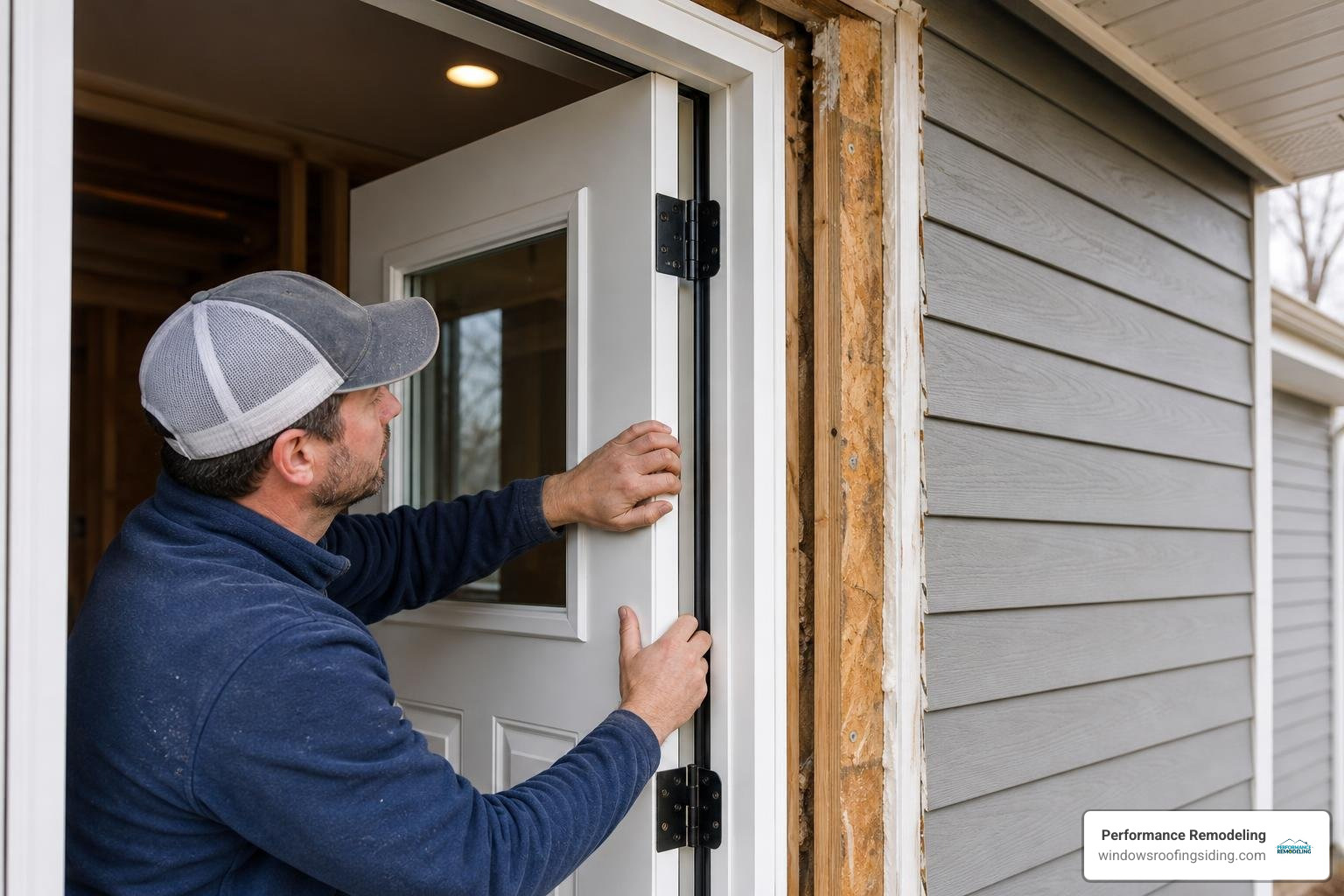
When shopping for a new entry door, you will need to choose between buying a “slab” or a “pre-hung” unit. Understanding this distinction is crucial because it dictates the difficulty of your installation and the overall weatherproofing of your entryway.
- Slab Door: This is just the door panel itself. It does not include hinges, a frame (jamb), or a threshold. You must cut out the hinge mortises, bore the holes for the lockset, and carefully plane the edges so it fits into your existing frame.
- Pre-Hung Unit: This is a complete, self-contained entry system. The door panel is already mounted onto a matching frame (jamb) with hinges pre-installed. It also includes the bottom threshold (sill), weatherstripping, and brickmold trim.
For the vast majority of replacement projects, we highly recommend choosing a pre-hung door unit. Trying to hang a raw slab door in an old, settled frame is incredibly tedious. If your existing frame is even slightly out of square, a new slab door will likely stick, bind, or leave drafty gaps. A pre-hung unit ensures that the door and frame are perfectly aligned right out of the factory, creating a tight, energy-efficient seal.
To help you decide, here is a direct comparison of the two configurations:
| Feature | Slab Door | Pre-Hung Unit |
|---|---|---|
| What’s Included | Door panel only | Door panel, jamb (frame), hinges, threshold, weatherstripping |
| Best For | Budget-friendly swaps where the existing frame is perfectly square and rot-free | New construction, major remodeling, or replacing drafty, rotted frames |
| Installation Difficulty | High (requires precise carpentry, mortising, and planing) | Moderate (requires plumbing and shimming the entire frame) |
| Weather Sealing | Depends entirely on your existing frame’s condition | Outstanding (factory-sealed weatherstripping and adjustable threshold) |
If you are replacing a standard side door or a garage entry, you might also want to review our comprehensive guide on garage doors to ensure all your home’s exterior entry points are equally secure and insulated.
Customizing Your 6 Panel Exterior Door with Glass and Hardware
Just because a six-panel door is a traditional design doesn’t mean it has to look plain. There are endless ways to customize the panel layout, colors, glass, and hardware to match your home’s unique personality.
Glass Inserts and Lites
While a solid 6 panel door offers maximum privacy and security, many homeowners prefer to let in some natural light. You can easily replace the upper panels of the door with glass inserts. A popular classic option is the CW 6-Panel Steel Exterior Door with 4-Lite Sunburst Door Lite – CODEL Doors , which features a semi-circular “sunburst” window at the top.
If you want a different look, you can explore various multi-lite front doors that incorporate decorative glass, grilles-between-glass (GBG), or textured privacy glass.
Paint and Stain Finishes
- Smooth Fiberglass and Steel: These surfaces are factory-primed and ready for paint. While classic white is always a safe bet, bold colors like navy blue, forest green, or deep charcoal can make your front entry pop. We recommend using high-quality exterior-grade acrylic latex paint.
- Textured Fiberglass and Wood: These surfaces are designed to be stained. Staining highlights the realistic wood grain patterns, giving you the rich appearance of cherry, walnut, mahogany, or white oak. Always apply a UV-resistant protective clear coat over the stain to prevent fading from direct sunlight.
Hardware and Security Upgrades
Your choice of hardware is the finishing touch on your entry system. Standard entries are pre-bored with a double-hole prep to accommodate a standard handleset and a secure deadbolt.
For maximum security and draft protection, we recommend upgrading to a multi-point locking system. Unlike a standard deadbolt that only secures the door at the center latch, a multi-point lock secures the door at three distinct locations (top, middle, and bottom) with a single turn of the key. This prevents the door from bowing and creates an incredibly tight seal against winter drafts.
Measuring and Installing a 6 Panel Exterior Door
Before ordering a new door from a local supplier or browsing options on 6 Panel – Exterior Doors , you must take exact measurements. Ordering the wrong size can lead to expensive shipping return fees and major construction delays.
How to Measure Your Door
To ensure a perfect fit, you must measure three critical areas:
- Door Slab Size: If you are only replacing the slab, measure the exact width, height, and thickness of your current door. Standard residential exterior doors are almost always 1-3/4 inches thick.
- Rough Opening (RO): If you are installing a pre-hung unit, you must measure the “rough opening” of the wall framing. Remove the interior trim casing to expose the raw wood studs. Measure the width between the studs (at the top, middle, and bottom) and the height from the subfloor to the header.
- Jamb Depth: Measure the thickness of your wall. Standard 2×4 framing typically requires a 4-9/16 inch jamb, while 2×6 framing requires a 6-9/16 inch jamb.
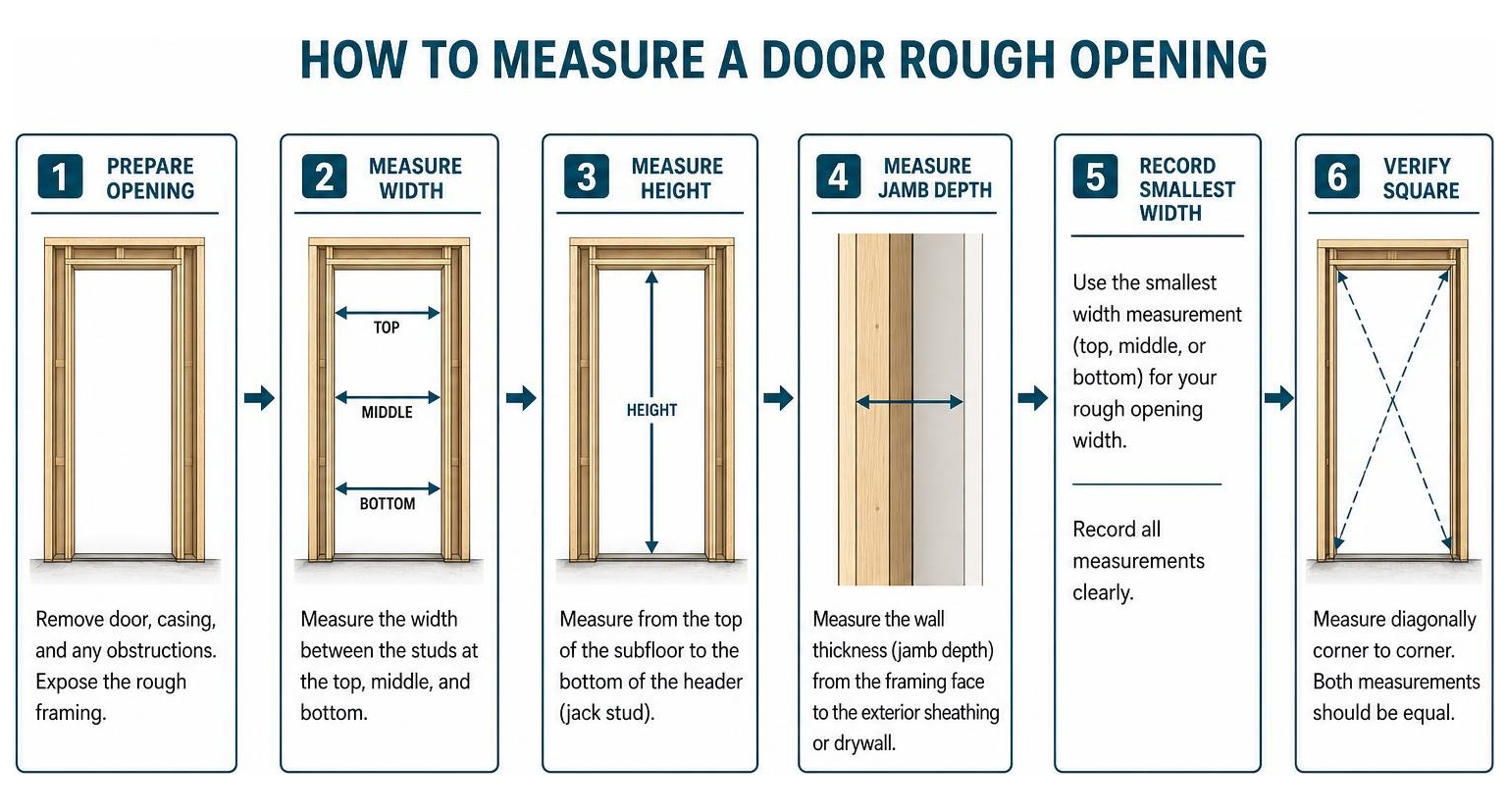
Calculating the Rough Opening
The golden rule of door installation is that your rough opening must be larger than the door slab itself to allow room for the door frame, shims, and insulation.
As a general rule of thumb, add at least 2 inches to the width and 2-1/2 inches to the height of the door slab to find your minimum rough opening.
- For a standard 36″ x 80″ door slab, your rough opening should be at least 38″ x 82-1/2″.
- For a standard 32″ x 80″ door slab, your rough opening should be at least 34″ x 82-1/2″.
Understanding Door Handing and Swing
You must also specify the “handing” and “swing” of your door before ordering:
- Inswing vs. Outswing: Inswing doors open into the house (the standard for most residential front entries). Outswing doors open toward the outside (often used in hurricane-prone areas or tight spaces).
- Left-Hand vs. Right-Hand: Stand on the outside of your home looking at the door. Whichever side the hinges are on determines the handing. If the hinges are on the left, it is a left-handed door; if they are on the right, it is a right-handed door.
Weatherproofing and Performance for Midwest Climates
In Southeast Michigan, our homes experience dramatic temperature swings. We can easily go from a humid 90°F in July to a freezing -5°F in January. This constant shifting creates a “freeze-thaw” cycle that causes wood to expand and contract, steel to transfer cold, and cheap frames to rot.
To ensure your 6 panel exterior door stands up to these conditions, look for these key performance features:
- Composite Jambs: Traditional wood door frames are highly susceptible to absorbing moisture from snow piles at the base of the door, leading to wood rot. Opt for rot-resistant composite frames (like CODEL’s WeatherGuard system) that will never absorb water, warp, or attract wood-boring insects.
- Adjustable Sill Pans: We highly recommend installing a durable PVC adjustable sill pan beneath your threshold. This pan acts as a miniature gutter system, catching any water that slips past the weatherstripping and directing it safely outside before it can rot your home’s plywood subfloor. In fact, failing to install a sill pan can void many manufacturers’ warranties against water damage.
- Low-Wick Weatherstripping: High-quality compression weatherstripping (such as PE650 bronze low-wick weatherstripping) stays flexible in freezing temperatures, ensuring a tight seal against howling winter winds.
- Adjustable Thresholds (Sills): Over time, a house will settle, creating tiny gaps at the bottom of the door. An adjustable composite sill allows you to easily raise or lower the threshold with a simple screwdriver to maintain a perfect, draft-free seal.
Frequently Asked Questions About 6 Panel Doors
Can you trim a steel or fiberglass 6-panel door?
No, you should never attempt to trim a steel door. Cutting a steel door will expose the raw foam core, destroy the structural integrity of the steel edges, and completely void your warranty.
Fiberglass doors can occasionally be trimmed, but only by a very minor amount (typically no more than 1/4 inch to 1/2 inch from the top, bottom, and sides) depending on the manufacturer’s specifications. If you have an odd-sized or highly out-of-square historic frame, a custom-ordered pre-hung unit or a trimmable wood door is a much safer option.
What is the standard rough opening for a 36″ x 80″ door?
The industry standard rough opening for a nominal 36″ x 80″ pre-hung door unit is 38 inches wide by 82-1/2 inches high. This provides a 1-inch wiggle room on all sides of the frame to allow for proper plumbing, leveling, shimming, and insulating during the installation process.
Do I need a storm door with a fiberglass entry door?
Generally, no. Modern fiberglass doors are incredibly durable and energy-efficient on their own, meaning they do not require the extra protection of a storm door.
In fact, installing a glass storm door over a dark-colored fiberglass door that receives direct afternoon sunlight can actually do more harm than good. The glass on the storm door can trap extreme heat against the entry door, which can warp the fiberglass skin, peel the finish, and potentially void the manufacturer’s warranty.
Conclusion: Get the Perfect Entry System with Performance Remodeling
A 6 panel exterior door is a beautiful, secure, and timeless investment for your home. However, even the most expensive, high-end door will fail to perform if it isn’t installed with absolute precision. A poorly hung door will sag, stick, let in drafty winter air, and eventually allow water to seep into your subfloor.
At Performance Remodeling, we believe in doing things right the first time. We provide expert door replacement and installation services across Southeast Michigan, including Shelby Township, Troy, Farmington Hills, and the greater Metro Detroit area.
When you partner with us for your entry doors project, you aren’t just getting a beautiful new entryway — you are getting the peace of mind that comes with the best lifetime guarantee in the region. We back our durable materials and quality craftsmanship with over 18 years of local, trusted service.
Ready to boost your home’s curb appeal, security, and energy efficiency? Contact our team at Performance Remodeling today to schedule your free, no-obligation consultation!