Your Metro Detroit Home Deserves Better Than Aging Siding and Drafty Windows
If you’ve been putting off siding and window replacement, you’re not alone — but the longer you wait, the more it costs you in energy bills, repairs, and lost home value.
Here’s what most Metro Detroit homeowners want to know right away:
Quick Answer: Should you replace siding and windows at the same time?
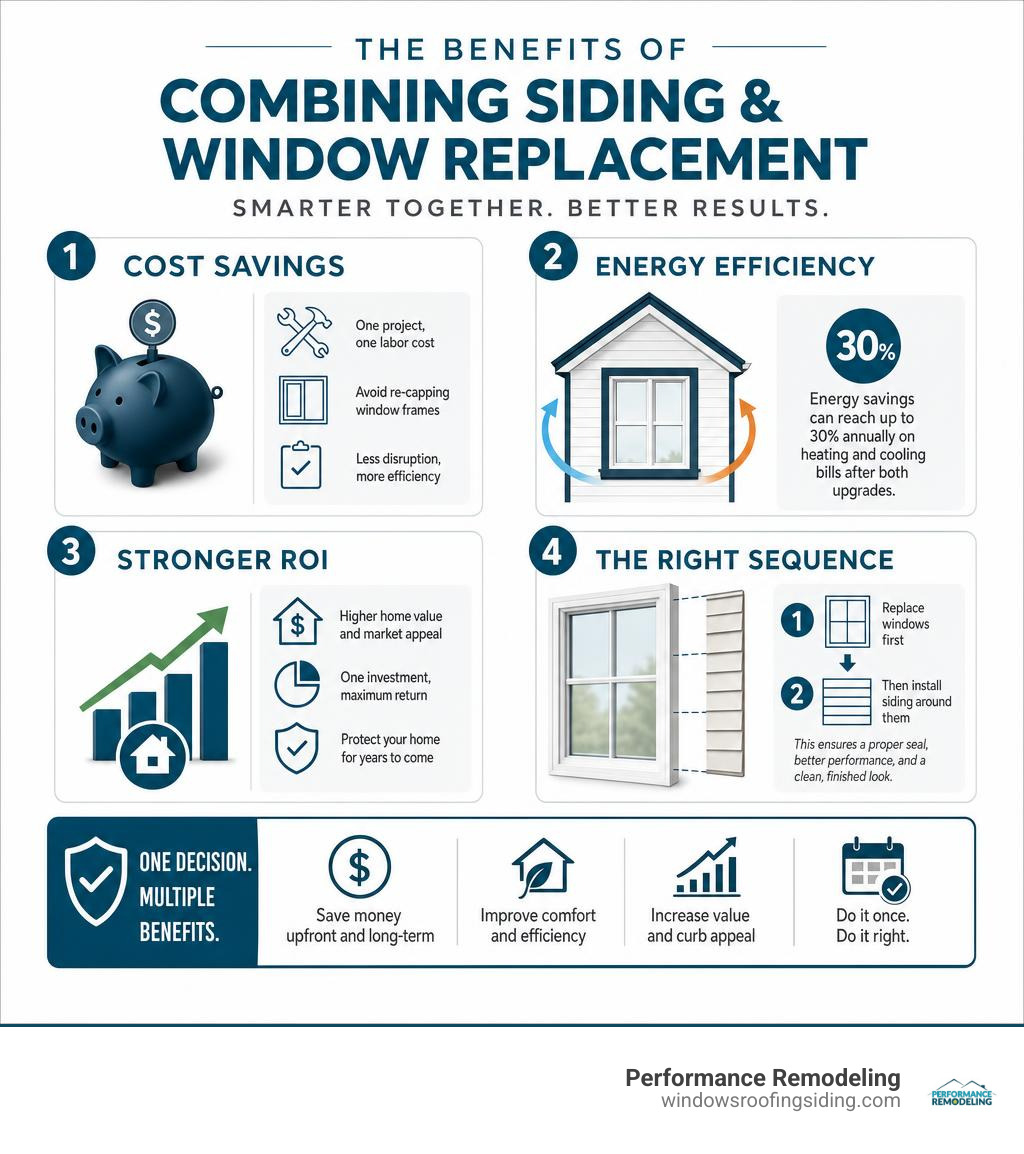
- Yes — combining both projects saves money on labor, avoids redundant work like re-capping window frames, and maximizes your return on investment
- Replace windows first, then wrap siding around them — this is the correct installation sequence
- Replace siding first only if there’s active rot, mold, moisture damage, or structural issues that can’t wait
- Energy savings can reach up to 30% annually on heating and cooling bills after both upgrades
- Tax credits of up to $3,200 per year (30% of costs) may be available through federal energy-efficiency incentive programs
Southeast Michigan homes — especially those built between the 1950s and 1980s — take a beating. Harsh winters, freeze-thaw cycles, and humid summers accelerate wear on both siding and windows faster than in milder climates.
The result? Drafts you can feel across the room. Energy bills that keep climbing. Siding that warps, fades, or hides moisture damage behind it.
What starts as “I should probably replace those windows” quickly becomes a full exterior conversation — and rightfully so. Windows and siding fail on roughly the same timeline, and replacing them together isn’t just convenient. It’s smarter, cheaper, and better for your home long-term.
This guide walks you through everything: project sequencing, material choices, financial incentives, and what to expect when you hire a professional team to handle both.
Why You Should Combine Siding and Window Replacement

When homeowners in Oakland County or Macomb County think about exterior remodeling, they often view windows and siding as entirely separate check-boxes. You might think, “We’ll do the windows in Farmington Hills this spring, and maybe we’ll look at the siding in a year or two.”
While splitting the projects seems easier on the immediate budget, it actually costs you more in the long run.
Tackling a combined siding and window replacement is one of the most efficient home improvement strategies available. When we look at project efficiency, having a single professional crew handle both projects simultaneously eliminates redundant labor steps. For example, to properly install replacement windows, the contractor must work around the existing siding. If you replace the siding later, the crew has to disturb the newly installed window trim, casing, and capping.
By combining these projects, you save on:
- Shared Setup and Cleanup Costs: Crews only need to prep your yard, set up scaffolding, and clean up the construction debris once.
- Redundant Labor: The window installation and siding trim integration happen seamlessly in one continuous workflow.
- Material Coordination: You avoid the risk of mismatched trim colors or damaging your brand-new windows while tearing off old siding later.
Maximizing Energy Efficiency and ROI
Beyond the immediate labor savings, combining these two projects creates an impenetrable thermal envelope around your home.
In SE Michigan, our winters are freezing and our summers are sticky. If you only replace your windows, heated air will still escape through drafty, uninsulated wall cavities behind your old siding. Conversely, if you only replace your siding, heat will continue to leak through drafty, single-pane glass.
When you do both, you can install a high-performance house wrap (like GreenGuard) under your new siding and combine it with energy-efficient multi-pane windows. This double-defense system can help you save up to 30% on your annual energy bills.
Additionally, according to Remodeling Magazine’s historical Cost vs. Value data, combining these exterior updates can recoup up to 80% of the project cost in added home value. If you plan to sell your home in Plymouth, MI, Novi, or Rochester Hills, you will be pleased to know that homes with updated exteriors (windows, siding, and doors) sell up to 20% faster than those with outdated facades.
For those preparing for the bitter cold months, check out The Detroit Homeowners Guide to Weatherproofing Your Windows & Doors for Winter to learn how a sealed exterior protects your home’s structural integrity.
Financial Incentives for Combined Siding and Window Replacement
As of May 2026, homeowners have access to incredible financial incentives that make combined exterior renovations more affordable than ever.
Under the federal energy-efficiency guidelines expanded by recent infrastructure incentives, you can claim up to $3,200 annually in tax credits (representing 30% of the project costs) for qualified energy-saving home upgrades. This includes up to $600 for energy-efficient exterior windows and up to $1,200 for qualified insulation or weather barrier upgrades installed during your siding replacement.
To help manage the remaining balance, we offer flexible financing options. Rather than draining your liquid savings, you can take advantage of low-monthly-payment plans or promotional interest-free periods. This allows you to lock in today’s material prices, enjoy immediate utility savings, and pay off your beautiful new exterior over time.
Sequencing Your Project: Which Comes First?

If you must split the project due to budget constraints, understanding the correct physical sequence of installation is crucial.
To ensure your home remains completely watertight, windows should almost always be installed before your new siding.
During a professional Window Installation, the installer must nail the window’s mounting flange directly to the home’s wooden framing (sheathing). To prevent water from leaking behind the walls, a moisture barrier (house wrap) and specialized flashing tape must be layered over this flange.
If your new siding is already installed, the crew would have to cut back or remove the siding around every single window opening to access the framing and apply the flashing correctly. This ruins the look of your new siding and increases the risk of water leaks.
Why Windows Typically Go First
When we perform a window replacement, we integrate the new window frames directly with your home’s structural opening.
Installing windows first allows us to:
- Set the window perfectly square and level within the rough opening.
- Apply high-density expanding foam insulation around the frame to eliminate drafts.
- Install the primary moisture flashing over the window flanges.
- Allow the siding crew to butt the new siding and J-channel trim perfectly against the window frame for a clean, watertight seal.
To learn more about what to expect when our crews arrive at your home, read our guide on What to Expect During a Professional Window Installation.
When to Prioritize Siding and Window Replacement Due to Damage
While the “windows-first” rule is standard, there are critical exceptions where you must address your siding immediately.
If you notice visible signs of structural compromise, delaying your siding replacement can lead to catastrophic damage to your home’s wooden framing. You should prioritize your siding project if you observe:
- Active Wood Rot: Soft, crumbling wood sheathing underneath your siding boards.
- Mold or Mildew: Mold growing on interior drywall or behind existing siding, indicating that water is trapped.
- Pest Infestations: Termites, carpenter ants, or rodents nesting inside gaps in your siding.
- Severe Warping or Gaps: Siding that has pulled away from the wall, leaving the underlying wood completely exposed to Michigan’s rain and snow.
If water penetrates your home’s sheathing, it won’t matter how energy-efficient your new windows are; the structural framing holding those windows will begin to fail. In these urgent scenarios, we recommend addressing both systems together so we can repair any hidden rot before sealing your home back up.
Explore our dedicated Siding and Windows service pages to see how we address structural repairs during our tear-off processes.
Choosing the Right Materials for Your Michigan Home
Michigan’s climate is uniquely demanding. In Metro Detroit, our homes experience sweltering 90°F summer days and sub-zero winter nights. This extreme temperature swing causes materials to expand and contract constantly.
If you choose cheap, low-grade products, your siding will buckle and crack, and your window frames will warp, leading to drafts and seal failures.
When planning your exterior makeover, choosing durable, climate-tested materials is essential. For localized advice on choosing the best materials for our region, check out our Metro Detroit Siding Solutions.
Vinyl Siding Tiers and Performance
Vinyl siding remains the most popular choice for homeowners in Shelby Township, Commerce, and West Bloomfield due to its low maintenance, durability, and cost-effectiveness. However, not all vinyl siding is created equal. It is typically manufactured in tiered performance series:
- Entry-Level (1000–2000 Series): Thinner panels (around 0.040 inches) that offer basic protection. While highly budget-friendly, they are more susceptible to impact damage from hail or stray lawnmower rocks and may fade faster under direct sunlight.
- Mid-Range (4000 Series): Thicker panels (0.044 to 0.046 inches) featuring enhanced locking systems to withstand high winds. These offer a great balance of durability, color retention, and affordability.
- Premium Insulated (6000 Series): Heavy-duty panels featuring solid foam insulation laminated directly to the back of the vinyl. This insulation fills the void behind the siding, drastically improving your home’s R-value (thermal resistance), reducing exterior noise, and providing maximum impact resistance.
If you have a home with unique architectural features, such as a bay window, material selection and professional trim work are key to avoiding a cheap, boxed-in look. Learn how to handle these tricky areas with our guide: Don’t Let Your Bay Window Siding Be a Boxy Disaster.
Window Materials and Sizing for Large Homes
Just like your siding, your replacement windows need to stand up to Michigan’s harsh climate. We specialize in several high-performance window frame materials:
- Vinyl Frames: Multi-chambered vinyl frames are highly energy-efficient, pocket-friendly, and virtually maintenance-free. They never require painting or staining and resist warping, fading, and cracking.
- Fiberglass: Exceptionally strong and stable, fiberglass expands and contracts at virtually the same rate as glass. This prevents seal failures and ensures your windows remain draft-free for decades.
- Clad-Wood: These windows offer the unmatched interior warmth and beauty of real wood, protected by a low-maintenance, weather-resistant aluminum exterior cladding that eliminates the need for repainting.
For larger homes in Farmington Hills or Rochester Hills, window replacement requires careful planning and budgeting. To help you calculate your potential costs, we’ve put together a comprehensive guide: Window Replacement Math for Large Homes.
Frequently Asked Questions about Siding and Window Replacement
What are the warning signs that my siding and windows need immediate replacement?
You should look out for several key warning signs that indicate your home’s exterior is failing:
- Rising Energy Bills: A steady increase in your heating and cooling costs often points to drafty windows and degraded wall insulation.
- Peeling Interior Paint or Wallpaper: This is a classic sign of moisture infiltration through failed siding or window flashing.
- Drafts and Condensation: If you feel cold air flowing near your windows or notice fogging between your double-pane glass, your window seals have failed.
- Warped, Cracked, or Loose Siding: Siding that is pulling away from your home or showing visible cracks allows water to seep directly into your home’s framing.
If you are noticing these red flags around your home, explore your options on our Metro Detroit Window Replacement page.
How long do modern siding and window materials last in Michigan’s climate?
With professional installation and proper maintenance, today’s high-quality materials are built to last:
- Vinyl Siding typically lasts 20 to 40 years. Premium insulated vinyl siding tends to last longer because the foam backing supports the panel and prevents warping.
- Fiber Cement Siding (like James Hardie) is incredibly durable and can easily last 50+ years because it resists rot, fire, insects, and heavy impacts.
- High-Quality Windows (vinyl, fiberglass, or clad-wood) generally have a lifespan of 20 to 25 years before the seals degrade or the hardware wears out.
To see our full range of long-lasting siding options, visit our Siding Installation Services page.
Can I get local financing or tax credits for my exterior remodel in 2026?
Yes! As of May 2026, there are several excellent pathways to make your project highly affordable:
- Federal Energy Tax Credits: You can claim up to 30% of your costs (up to $3,200 annually) for installing qualified energy-efficient windows, doors, and insulation materials.
- Flexible Financing Plans: We offer customized financing options, including low monthly payment plans and promotional interest-free periods, allowing you to fit your combined remodel comfortably into your household budget.
- Utility Rebates: Some local Michigan energy providers offer additional rebates for upgrading to ENERGY STAR® certified windows and doors.
To explore our current financing promotions and start planning your project, check out our Performance Remodeling Services page.
Conclusion
Your home is your most valuable asset, and protecting it from Michigan’s unpredictable weather requires an exterior that is both beautiful and structurally sound. Opting for a combined siding and window replacement is the ultimate way to lower your energy bills, elevate your curb appeal, and maximize your return on investment.
At Performance Remodeling, we have spent more than 18 years helping homeowners across Southeast Michigan — from Shelby Township and Rochester Hills to Commerce, Novi, and Plymouth — transform their homes. We pride ourselves on using only premium materials, delivering flawless craftsmanship, and backing our work with the best lifetime guarantee in the region.
When you choose us, you are partnering with a local, dedicated team that treats your home like our own.
Ready to double down on your home’s curb appeal and energy efficiency? Schedule your professional consultation today and let’s build an exterior you’ll love for a lifetime.