
The Real Cost of Getting Siding And Window Replacement Wrong
Siding window replacement is one of the most impactful exterior upgrades you can make to your home — but only if it’s done in the right order, with the right methods.
Here’s a quick answer to what most homeowners want to know:
Quick Guide: Siding Window Replacement Order & Process
- Replace windows first — before new siding goes on, so flashing and capping integrate cleanly
- Use pocket/insert replacement if your existing frame is solid and siding is in good shape
- Use full-frame replacement if there’s rot, water damage, or major structural issues
- Cut back siding only when needed — for full-frame installs or when J-channel must be replaced
- Do both at once if possible — combined projects save on labor, scaffolding, and mobilization costs
Here in Metro Detroit and the surrounding suburbs, we see the same story play out over and over. A homeowner replaces their siding first — it looks great. Then a year later, they need new windows. Now the installers have to cut into that brand-new siding, redo the capping, and replace the moisture barrier. Double the disruption. Double the cost.
Michigan weather doesn’t forgive mistakes on your home’s exterior. Between the freeze-thaw cycles, heavy rain, and humid summers, a gap in your flashing or a cracked J-channel can quietly let water work its way into your walls for months before you notice the damage.
Getting the sequence and technique right from the start isn’t just about saving money — it’s about protecting your home for the long haul.
Should You Replace Windows or Siding First?
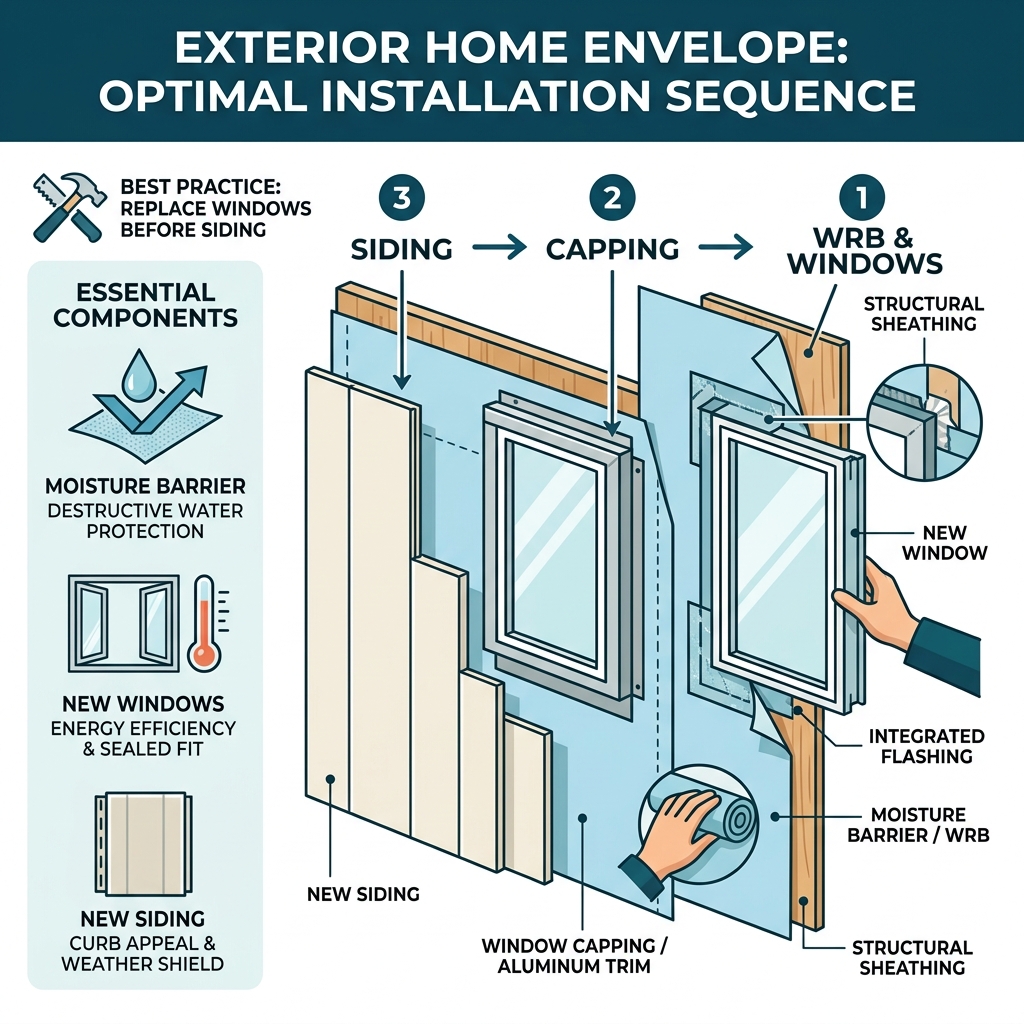
When we sit down with homeowners in places like Shelby Township or Farmington Hills, the “chicken or the egg” question always comes up: windows or siding? While you can do either one first, there is a clear winner for the most efficient installation sequence.
In a perfect world, you should replace your windows before your siding. Think of your home’s exterior as a structured system or an “envelope.” The windows are integrated into the wall’s moisture barrier. When we install windows first, we can ensure the window capping—the protective aluminum covering over the exterior wood frame—is installed and sealed perfectly.
If you install siding first, the new siding panels and J-channels (the trim that holds the siding edges) are already in place. When the window crew comes later, they often have to remove or cut back that brand-new siding to reach the window’s nailing flange or to properly install new capping. This leads to redundant labor and, quite frankly, a higher bill for you.
Furthermore, replacing siding first can lead to moisture barrier issues. If the window flashing isn’t tucked behind the house wrap (which is installed under the siding), you’re inviting leaks. By prioritizing windows, we ensure the “envelope” is sealed from the inside out.
The ROI of exterior improvements is incredibly high in the Metro Detroit market. Prospective buyers in Michigan look for a “tight” house—one where the windows and siding work together to keep the heating bills low during our January freezes. If you’re ready to see how new siding can transform your home’s look after the windows are set, you can learn more about our siding options.
Benefits of Simultaneous Siding Window Replacement
While “windows first” is the rule of thumb for staggered projects, the absolute “gold standard” is doing both at the same time. This is a smart move for Southeast Michigan homeowners for several reasons.
First, let’s talk about your wallet. Bundling these projects leads to significant labor savings. When we send a crew to your home in Rochester Hills or Novi, there are “mobilization fees”—the cost of getting the trucks, the scaffolding, and the team to the site. If we’re there to do both siding window replacement tasks at once, those costs are streamlined. We don’t have to set up and tear down scaffolding twice.
Second, the energy efficiency gains are massive. According to industry statistics, replacing both windows and siding can cut your energy bills by up to 20%. This is especially true if you opt for Energy Star-rated windows and insulated vinyl siding.
Finally, there’s the “unified design” factor. It’s much easier to coordinate the color of your window frames with your siding when you’re looking at samples for both at the same time. You can find more info about window services to see how different styles can complement our various siding series.
Why Windows Often Come First
If you must choose one, the reason windows take priority often comes down to structural integrity. When we remove an old window, we gain access to the “rough opening”—the wooden frame inside your wall. This is the only time we can truly inspect for rot or carpenter ant damage that might be hidden behind the walls.
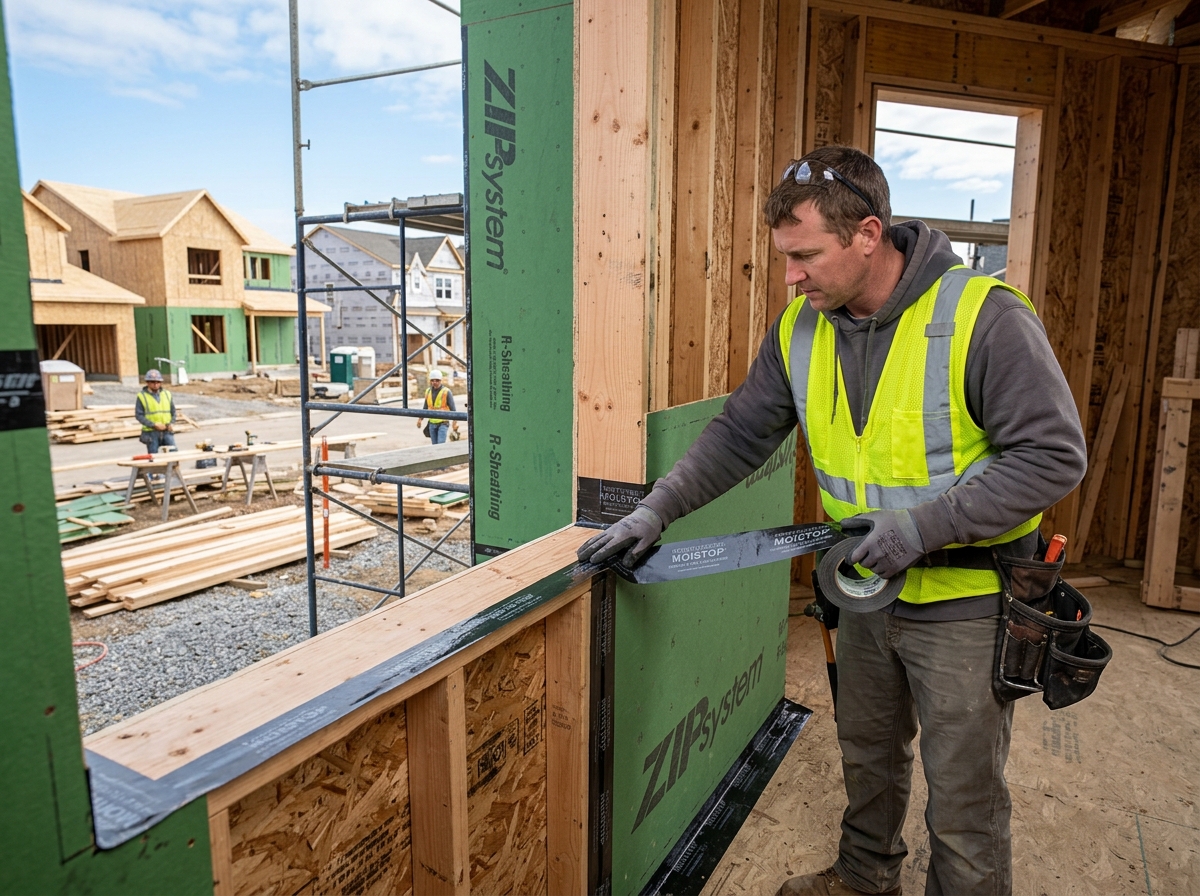
Proper weatherproofing relies on flashing tape. This tape must be applied directly to the sheathing and integrated with the house wrap. If the siding is already there, we’re essentially working with one hand tied behind our back.
Consider the climate in our region. While we aren’t in the tropics, the Great Lakes region deals with significant moisture. For context, some nearby rainy cities average over 140 days of precipitation a year, and Southeast Michigan isn’t far behind with its own mix of snow, sleet, and rain. Proper flashing during a window-first installation ensures that the 140+ days of Michigan “weather” stay outside where they belong.
The Technical Side of Siding Window Replacement
Understanding the technical jargon can help you make a better decision for your home. When it comes to siding window replacement, there are two primary installation methods: full-frame and pocket (or insert) replacement.
- Full-Frame Replacement: This involves removing the entire window, including the frame and the nailing fins (the flat strips around the window that nail into the house). This is the best method if you’re also replacing siding, as it allows for a brand-new seal against the home’s framing.
- Pocket/Insert Replacement: This is like a “window within a window.” We remove the old sashes but leave the existing frame. This is a great DIY-friendly or budget-friendly option if your frames are in perfect condition and you don’t want to touch your existing vinyl siding.
If you are replacing windows in a home that already has vinyl siding, we have to be very careful with the J-channel. This is the trim piece that looks like the letter “J” and hides the ends of the siding panels around the window. If the J-channel is damaged during the swap, it must be replaced to prevent water intrusion.
To avoid cracking your siding—especially if it’s older and brittle—our crews use specialized oscillating tools. Unlike a standard circular saw, an oscillating tool allows for precise, vibrating cuts that won’t shatter the vinyl panels. You can read more about what to expect during professional window installation to see how we handle these delicate transitions.
Best Practices for Siding Window Replacement
A “good enough” installation doesn’t cut it in Metro Detroit. Here are the non-negotiables we follow for a successful project:
- Drip Caps: A metal “L” shaped flashing that sits on top of the window. It directs water away from the frame and over the siding. Without this, water will eventually seep behind your siding and rot your headers.
- Shims and Leveling: Windows must be perfectly plumb and level. If a window is “forced” into an opening, it will eventually warp, leading to air leaks and difficulty opening the sash.
- Proper Sealing: We use high-quality, flexible caulk that can handle Michigan’s temperature swings (from 90°F in July to -10°F in January) without cracking.
- Flashing Integration: The window flashing must be “shingled”—meaning the top layer overlaps the bottom layer—so gravity pulls water down and away.
For those curious about the different materials available, this technical guide on vinyl siding types explains how various series can impact your home’s durability.
Installation Methods for Existing Vinyl Siding
Can you replace windows without removing your siding? Absolutely. Here is how we handle it:
- The “Cut-Back” Method: If we are doing a full-frame replacement on a sided home, we may need to cut back the siding by about 2-3 inches. This gives us room to install the new nailing fins and flashing. We then cover that gap with a wider, decorative trim board (often called “casing”), which gives the home a high-end, custom look.
- The “Finless” Method: Some installers cut the nailing fins off the new window and slide it into the opening, securing it through the side of the frame. While this preserves the siding, it relies heavily on caulk for waterproofing. We generally recommend the cut-back method for a more permanent, watertight seal.
Be aware that vinyl siding becomes very brittle in cold weather. If we’re working on your home in Macomb Township or Romeo during the winter, we have to take extra precautions to prevent the siding from “shattering” like glass when handled. You can find more professional window installation details on our service page.
Maximizing ROI and Energy Efficiency in Michigan
In the Greater Metro Detroit area, your home is your biggest investment. Choosing the right installation type and materials can make the difference between a 5-year fix and a lifetime solution.
| Feature | Pocket (Insert) Replacement | Full-Frame Replacement |
|---|---|---|
| Siding Impact | Little to none | Requires trim or siding adjustment |
| Glass Area | Slightly reduced | Maximized |
| Insulation | Relies on old frame | New insulation around opening |
| Best For | Sound frames, tight budgets | Rotting frames, total renovations |
| Cost | Lower | Higher |
To get the most out of your siding window replacement, consider upgrading to triple-pane glass. While double-pane is the standard, triple-pane offers an extra layer of insulation and significantly reduces noise—perfect if you live near a busy road in Troy or Sterling Heights.
Pairing these windows with insulated vinyl siding (like our 6000 Series) creates a thermal blanket around your home. The 6000 Series features a contoured foam backing that fills the gap between the siding and the wall, increasing your home’s R-value (insulation rating) and making the siding much more resistant to hail or “the neighbor kid’s baseball.”
Coordinating Styles for Metro Detroit Homes
Curb appeal isn’t just about being “new”—it’s about being “cohesive.” One of the biggest trends we see in Southeast Michigan right now is the use of black window frames against light-colored siding. This “modern farmhouse” look provides a sharp contrast that makes the architecture pop.
If you prefer a classic look, consider pairing tan or “linen” colored siding with white trim and windows. This creates a warm, inviting feel that never goes out of style.
When choosing your siding, think about texture. You can choose from:
- Traditional Lap: The classic horizontal look.
- Dutch Lap: Features a decorative groove that creates deep shadow lines.
- Shake and Shingle: Mimics the look of real wood but without the maintenance of staining and painting.
Essential Questions for Your Installation Contractor
Before you sign a contract for siding window replacement, you need to vet your contractor. Not all “window guys” are “siding guys,” and vice versa. You want a team that understands how the two systems interact.
Ask these questions:
- “Will you be using an oscillating tool to cut my siding?” (If they say a circular saw, be wary—it’s much harder to control on vinyl).
- “Do you use your own crews or subcontractors?” (At Performance Remodeling, we take pride in our consistent quality).
- “What is the specific plan for flashing the windows into the existing siding?”
- “Is there a pre-installation inspection?” (A technician should always come out to measure and check for siding brittleness before the windows are even ordered).
- “Does your warranty cover the installation labor or just the products?”
Our lifetime guarantee is the best in the region precisely because we cover both. We’ve been serving the Metro Detroit area for over 20 years, and we know that a product is only as good as the person installing it.
Common Mistakes in Siding Window Replacement
Even professionals can make mistakes if they’re rushing. Here are the “red flags” to look out for during your project:
- Over-Foaming: Expanding spray foam is great for insulation, but if too much is used, it can actually bow the window frame, making it impossible to open the window.
- Skipping the Drip Cap: Proper head flashing and water management help direct water away from window openings and reduce moisture intrusion risk.
- Improper Caulking: Leaving no gaps for drainage. In some installations, you actually want a tiny “weep hole” in the caulk at the bottom to let any trapped moisture escape.
- Forcing a Fit: If the window doesn’t slide in easily, the rough opening needs to be adjusted. Forcing it leads to seal failure.
- Ignoring Rot: If we find a rotted sill and just cover it up with new siding, that rot will continue to spread. A reputable contractor will stop and fix the wood first.
Frequently Asked Questions about Siding Window Replacement
Can you replace windows without removing vinyl siding?
Yes, this is very common. If your existing window frames are in good shape, we can use “insert” or “pocket” windows. These slide right into the old frame, leaving your siding and interior trim completely untouched. If you need a full-frame replacement, we can still do it by carefully removing the J-channel and cutting back a small portion of the siding, which is then covered by new, wider exterior trim.
How much can I save by doing both at once?
While every home is different, homeowners often save 10% to 15% on total labor costs by bundling windows and siding. You save on “mobilization fees,” scaffolding rental, and the labor required to “marry” the two systems. Instead of the window crew and the siding crew each charging to work around the other’s mistakes, one team handles the entire “envelope” from start to finish.
How do I know if my siding is too brittle for window work?
Age and UV exposure are the biggest factors. If your siding is more than 15-20 years old and has significant fading, it’s likely brittle. You can test this by going to a discreet area (like the back of the garage) and gently trying to flex a panel. If it feels stiff or makes a “cracking” sound, it’s brittle. In these cases, we highly recommend replacing the siding along with the windows, as the old siding is likely to break during the window installation process anyway.
Conclusion
A successful siding window replacement is about more than just picking out pretty colors. It’s about understanding the “science” of your home’s exterior—how water flows, how air escapes, and how materials expand and contract in our volatile Michigan climate.
At Performance Remodeling, we’ve spent the last 20+ years perfecting this process for homeowners across Southeast Michigan, from Livingston County to St. Clair County. Whether you’re in a historic home in Plymouth or a modern build in Commerce, we bring the same level of craftsmanship and attention to detail to every project.
Our lifetime guarantee isn’t just a piece of paper; it’s a promise backed by nearly two decades of service in Metro Detroit. We use only the most durable materials, like our 6000 series insulated siding and high-performance Pella windows, to ensure your home stays beautiful and energy-efficient for as long as you live in it.
Don’t leave your home’s “envelope” to chance. If you’re ready to upgrade your curb appeal and slash your energy bills, we’re here to help. Schedule your exterior remodeling consultation today and let us show you why we’re the region’s trusted choice for windows and siding.