
What Is a 32×80 Front Door — and Is It the Right Size for Your Home?
A 32×80 front door is one of the most common entry door sizes in the United States, measuring 32 inches wide by 80 inches tall. If you need a quick answer, here’s what you should know:
Key facts about 32×80 front doors:
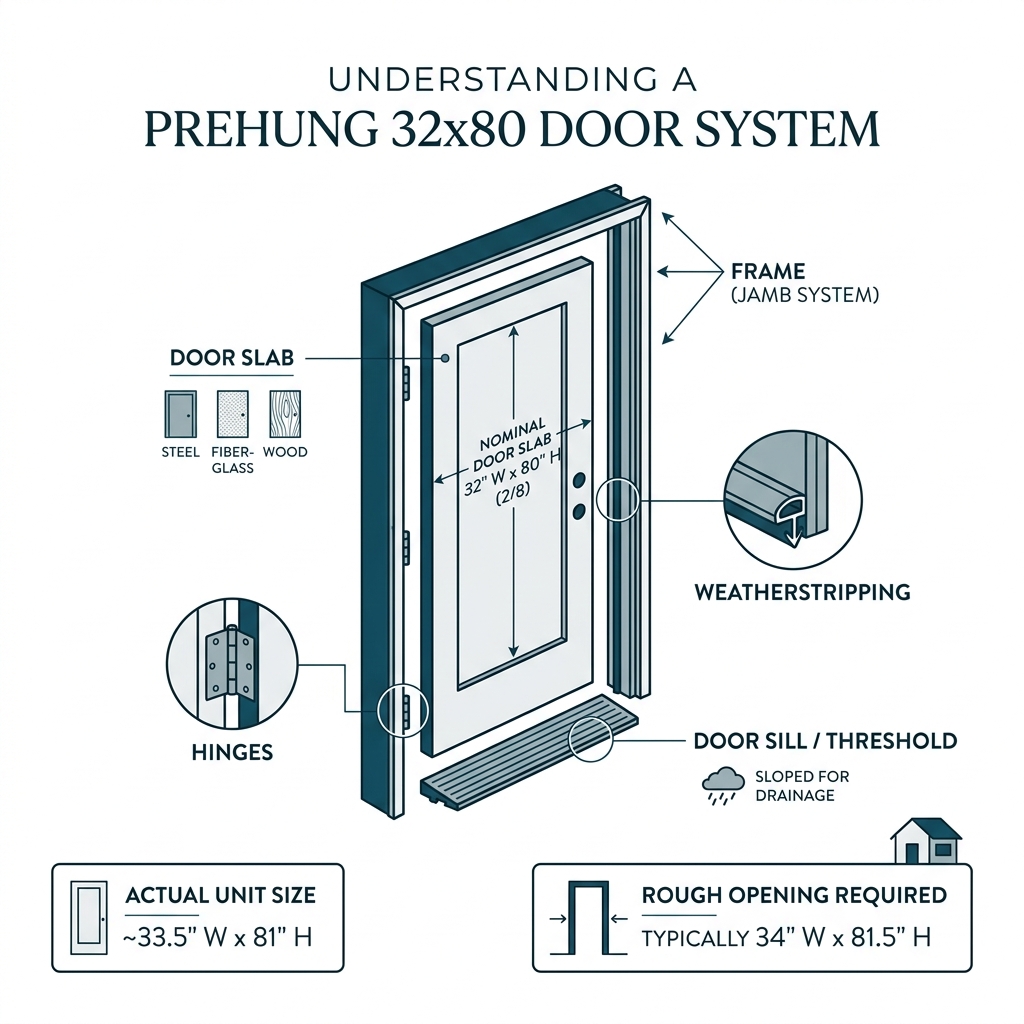
- Nominal size: 32″ wide x 80″ tall (also called a “2/8 door” in the industry)
- Actual unit size: Approximately 33.5″ wide x 81″ tall when prehung
- Rough opening required: Typically 34″ wide x 81.5″ tall
- Common materials: Steel, fiberglass, wood
- Price range: ~$164 for a basic steel slab up to $2,450+ for premium wood with sidelites
- Best for: Older homes, narrower entryways, and specific architectural styles common in Metro Detroit
You’ll find this size in hundreds of homes across Southeast Michigan — especially in established suburbs where homes were built with narrower door frames. Whether you’re dealing with a rotting door frame, drafty entry, or just want to refresh your curb appeal, choosing the right 32×80 door matters more than most homeowners realize.
The material, glass type, handing, and installation method all affect how your door performs — especially through Michigan winters.
This guide walks you through everything: dimensions, materials, styles, pricing, and what to expect from a professional installation in the Metro Detroit area.
Understanding Dimensions and Rough Openings for a 32×80 Front Door
When we talk about a 32×80 front door, we are using “nominal” measurements. In the construction industry, this is often referred to as a 2/8 door (meaning 2 feet, 8 inches wide). However, the door slab itself isn’t the only thing you need to account for. If you are buying a prehung unit—which includes the door already attached to its frame—the total width and height will be larger than 32 by 80 inches.
To ensure your new door fits perfectly into your home in Shelby Township or Rochester Hills, you must measure the rough opening. This is the structural opening in the wall framed by 2×4 or 2×6 studs.
The Math Behind the Fit
A standard 32×80 front door usually requires a rough opening that is roughly 2 inches wider and 1.5 to 2 inches taller than the door itself. This extra space allows for the door frame (jambs), the threshold (sill), and enough “wiggle room” to shim the door until it is perfectly level and plumb.
| Feature | Nominal Measurement | Actual Unit Dimension | Required Rough Opening |
|---|---|---|---|
| Width | 32″ | ~33.5″ | 34″ to 34.5″ |
| Height | 80″ | ~81″ to 81.75″ | 81.5″ to 82.5″ |
Standard Jamb Depths
In Metro Detroit, most homes use standard 2×4 wall construction, which requires a 4-9/16 inch jamb depth. If you live in a newer home or an addition with 2×6 walls, you’ll likely need a 6-9/16 inch jamb. Getting this right is crucial; if the jamb is too narrow, your interior trim won’t sit flush against the wall.
How to Measure Like a Pro
- Measure the Width: Measure the space between the studs in the rough opening at the top, middle, and bottom. Use the smallest measurement.
- Measure the Height: Measure from the floor (subfloor) to the bottom of the header at both the left and right sides. Again, use the smallest measurement.
- Check for Square: Measure diagonally from corner to corner. If the two numbers are the same, your opening is square. If not, you’ll need to account for extra shimming.
For a deeper dive into the technical side of entryways, check out our Entry Doors page. If you’re planning a DIY swap, you can follow this Step-by-step installation guide to see the process in action.
Comparing Materials for Your 32×80 Front Door
Choosing the right material for your 32×80 front door is the most important decision you’ll make for long-term performance. In Southeast Michigan, our doors have to survive humid summers, freezing winters, and the occasional spring downpour.
Steel: The High-Security Workhorse
Steel doors are incredibly popular because they offer the most “bang for your buck.” Most modern steel doors, like those from Masonite or JELD-WEN, are made of 24-gauge galvanized steel.
- Pros: Highly secure, budget-friendly (starting around $260 for prehung units), and won’t warp or crack.
- Cons: Can dent if hit hard, and if the paint is scratched down to the metal, it can rust.
- Best For: Side entries, garage-to-house transitions, or homeowners on a budget who don’t want to sacrifice security.
Fiberglass: The Midwest Champion
If you’re wondering Steel Doors vs Fiberglass Doors: Which Will Hold Up Best in Midwest Weather?, the answer is almost always fiberglass. Fiberglass is engineered to mimic the look of real wood without any of the maintenance headaches.
- Pros: Won’t rot, rust, or warp. It features a polyurethane foam core that provides up to four times the insulating value of wood.
- Cons: More expensive than steel.
- Features to look for: Look for a 32×80 front door with a composite frame and rot-resistant bottom rails. This ensures that even if snow piles up against the base of the door, the frame won’t soak up moisture and rot.
Wood: The Timeless Classic
Nothing beats the authentic beauty of a mahogany or knotty alder wood door.
- Pros: Unmatched curb appeal and high-end feel.
- Cons: High maintenance. You must restain or paint it every few years to prevent moisture damage. In Michigan’s climate, wood doors can expand and contract, occasionally leading to sticking during humid months.
Regardless of the material, most modern 32×80 front doors come primed. This means they have a factory-applied base coat, ready for you to apply a final color that matches your shutters or siding.
Styles, Glass Options, and Security Features
Your front door is the “handshake” of your home. Whether you live in a classic colonial in Farmington Hills or a modern farmhouse in Novi, the style of your 32×80 front door should complement your architecture.
Popular Styles
- 6-Panel Traditional: The most common design, featuring six raised or flat panels. It’s a safe, timeless choice for almost any home.
- Craftsman Shaker: Known for clean lines and usually featuring a small window (lite) at the top. This is a huge trend in Southeast Michigan right now.
- Full Lite Modern: A single large pane of glass that lets in maximum natural light.
Glass and Privacy
If you choose a door with glass, you’ll need to balance light with privacy.
- Low-E Glass: This has a microscopic metallic coating that reflects heat. In the winter, it keeps your furnace’s heat inside; in the summer, it keeps the sun’s heat out.
- Tempered Glass: This is “safety glass” that crumbles into small pebbles rather than sharp shards if broken.
- Privacy Ratings: Glass is often rated on a scale of 1 to 10. A “Full Lite” door might have clear glass (rating 1), while a “Rain” or “Frosted” glass texture offers high privacy (rating 9).
- TDL vs. SDL: True Divided Lites (TDL) use individual panes of glass separated by muntins. Simulated Divided Lites (SDL) use one large pane with decorative grids glued on top, which is more energy-efficient.
Security Upgrades
A door is only as good as its lock. Most 32×80 doors come with double bore holes, allowing you to install both a handle set and a deadbolt. Many premium steel and fiberglass doors also feature reinforced lock blocks—an extra piece of wood or composite inside the door where the lock sits—to prevent the door from being kicked in.
If you’re looking for a specific look, you can Shop 32″ x 80″ Doors or browse our Windows section to find matching glass styles for your home’s exterior.
Installation Considerations: Handing and Prehung Units
One of the most confusing parts of buying a 32×80 front door is “handing.” If you order the wrong handing, your door will open the wrong way, potentially hitting a wall or blocking a light switch.
Determining Door Handing
To determine handing, stand on the outside of your home facing the door:
- Right-Hand Inswing (RH): The hinges are on the right, and the door pushes away from you into the house.
- Left-Hand Inswing (LH): The hinges are on the left, and the door pushes away from you into the house.
- Outswing Doors: In some cases (often for coastal areas or tight entryways), doors swing outward. In Michigan, inswing is the standard for front entries to prevent the hinges from being exposed to the elements and for better security.
Prehung vs. Slab
- Slab: Just the door itself. Choose this only if your existing frame is in perfect condition and you are a skilled carpenter capable of “mortising” (cutting out) the hinge pockets.
- Prehung: The door comes already mounted in a frame with weatherstripping and a sill. This is the gold standard for replacement because it ensures a tight seal against drafts.
The “Extras” That Matter
When we perform Services in the Metro Detroit area, we pay close attention to the components that keep the weather out. This includes:
- Brickmold: The decorative trim that bridges the gap between the door frame and your siding or brick.
- Weatherstripping: The flexible seals around the perimeter.
- Aluminum Sills: The “threshold” at the bottom. Look for adjustable sills that can be raised or lowered to create a perfect seal with the door sweep.
Professional installation in Southeast Michigan typically ranges from $500 to $1,500 depending on the complexity of the project, including the removal of the old door and disposal.
Frequently Asked Questions about 32×80 Front Doors
What is the typical price range for a 32×80 front door?
The price varies wildly based on material and glass.
- Budget Steel: $250 – $500. These are usually 6-panel primed doors without glass.
- Mid-Range Fiberglass: $600 – $1,200. This often includes decorative glass and a wood-grain texture.
- Premium Wood or Specialty Fiberglass: $2,000 – $4,500+. This includes high-end mahogany, decorative sidelites, and triple-pane glass. At Performance Remodeling, we focus on value—providing durable materials that last a lifetime. Learn more About Us and our commitment to quality.
How do I measure for a 32×80 prehung front door?
You need three measurements: the rough opening (width and height), the jamb depth (wall thickness), and the “tip-to-tip” measurement of your existing exterior trim if you want the new door to fit the same footprint. If you’re unsure, it’s always best to Contact Us for a professional measurement to avoid costly ordering mistakes.
Are 32×80 front doors energy efficient?
Yes, provided they are modern units. Look for the Energy Star label. A modern 32×80 front door made of fiberglass with a polyurethane core and Low-E glass is significantly more efficient than an old wood door. Proper weatherstripping is just as important as the door material itself. For more home efficiency tips, see our guides on Garage Doors.
Conclusion
Choosing a 32×80 front door is about more than just picking a pretty color. It’s about finding a unit that fits your home’s structure, provides security for your family, and stands up to the unique climate of Southeast Michigan. From the historic streets of Plymouth to the newer developments in Macomb County, the right door can transform your home’s curb appeal while slashing your energy bills.
At Performance Remodeling, we’ve spent over 18 years helping homeowners in Metro Detroit find the perfect balance of style and durability. We don’t just sell doors; we provide peace of mind with a comprehensive lifetime guarantee backed by Performance Remodeling. Our experienced team ensures that every installation is airtight, square, and built to last.
Ready to give your home the entrance it deserves? Contact Us today for a free estimate or Upgrade your home with a professional entry door installation and see the difference that quality craftsmanship makes.